
Chief Minister Hemant Soren Conducts a High-Level Review of the Updated Progress of the Agriculture, Animal Husbandry and Cooperatives Department
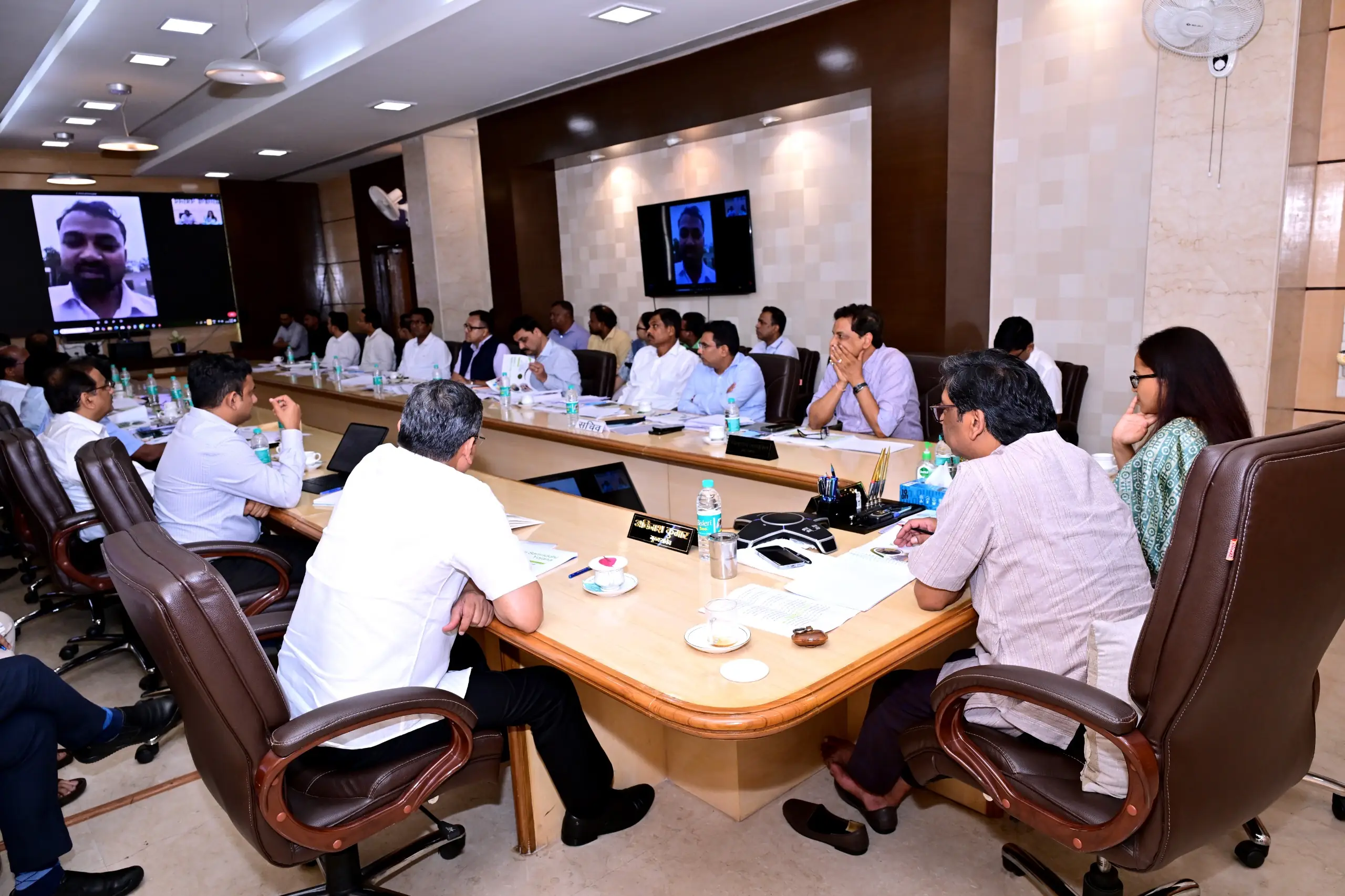
Chief Minister Hemant Soren conducted a high-level review of the updated progress of the Agriculture, Animal Husbandry and Cooperatives Department. He reviewed the progress of the financial year 2025-26 and the current fiscal year's work plan, giving officials several important directives. He instructed officials to work with full sensitivity and accountability to ensure that schemes related to agricultural interests reach the final farmer. He ordered that, in line with the state-level agricultural trade fair held in Ranchi, agricultural trade fairs should be organized in all divisions in different years. He directed that the Farmer Prosperity Scheme benefits be provided to as many farmers as possible. He ordered the operation of a model farmer school in each district of the state. He emphasized promoting the cultivation of pulses and millets in the state. He stated that farmer prosperity is a government priority and that the livestock and dairy sector should be accelerated. He instructed that farmers receive training in technology-based agriculture. Hemant Soren, Chief Minister of Jharkhand, reiterated these points. The Chief Minister reviewed the updated progress of the Agriculture, Animal Husbandry and Cooperatives Department today in the Jharkhand ministry with officials present. He told officials that the state government must ensure that schemes aimed at farmers' welfare reach them in any case, and that within the stipulated time frame farmers should receive inputs such as fertilizer, seeds, technical guidance and other necessary resources, and that the department should ensure this. He reviewed progress on schemes such as the Farmer Credit Card, Livestock Development Scheme, seed‑fertilizer distribution, cold storage, lamps and packs, trade chambers and cooperative societies, water source rejuvenation, and gave several important directives. The Minister of the Agriculture, Animal Husbandry and Cooperatives Department, Mrs. Shilpi Neha Turki, was also present. He emphasized that modern technology‑based agriculture and comprehensive farmer development are top priorities for the state government. Since agriculture and animal husbandry are the backbone of the rural economy, it is essential that government schemes reach every village and household. He directed further promotion of pulse and millet cultivation in the state, noting that some districts have performed well in these areas and that millet has vast potential. He confirmed that land is available for the agriculture department in all districts and instructed that at least one village or panchayat in each district be identified to set up model farmer schools, and that special training for technology‑based farming be provided. Officials informed him that 57 farmer schools are currently operating in the state. He urged coordination with agricultural universities and other institutions to train farmers in the latest technology‑based agriculture. He reminded that, as recently demonstrated at the state-level agricultural trade fair in Ranchi, similar fairs should be organized annually in all divisions, and that barren or fallow but arable land should be identified and a work plan prepared for agricultural activities there. He emphasized providing the Farmer Prosperity Scheme benefits to as many farmers as possible, highlighting that the scheme aims to supply solar‑powered pump sets for irrigation, reduce farming costs, increase farmer incomes, and promote self‑reliance. He called for accelerating the distribution of solar pump sets, which would save farmers money and reduce electricity dependence, and for establishing a robust framework for effective implementation of the scheme. He also stressed coordination with the Jareda office to ensure better implementation of the Farmer Prosperity Scheme and the PM Kusum Scheme. He instructed the development of a procurement system and planning for low‑rainfall conditions. He directed the creation of procurement systems and drought‑relief plans for the agriculture, animal husbandry and cooperative sectors, noting that the Palamu division suffers from low rainfall, leading to poor paddy yields, and urged promotion of pulses and millet in these rain‑deficient areas, as well as encouraging crop varieties that thrive with less water, organic and commercial farming, and water‑conserving practices. He reiterated that farmer prosperity is a government priority, stating that a large portion of the population relies on agriculture and allied businesses, and that increasing farmer incomes, disseminating modern agricultural technologies, and making agriculture a profitable enterprise are top priorities. He urged that government schemes reach the final farmer family with full sensitivity and accountability. He directed mapping of mushroom producers and establishing mushroom training centers in each district, creating women farmer producer groups for mushroom production and spawn, and promoting beekeeping, including providing protective aprons or PPE for beekeepers. He called for developing model agricultural villages or panchayats by surveying each, holding farmer meetings, soil testing, irrigation facilities and other basic needs, initially as pilot projects with local youth involvement. He instructed that welfare schemes be transparently extended to the maximum number of eligible farmers, avoiding repeated benefits to the same individual, and that land‑conservation schemes be delivered transparently. He emphasized accelerating the livestock and dairy sector, reviewing its role in strengthening the rural economy, directing effective implementation of dairy, goat, pig and poultry development schemes, regular animal vaccination, improved veterinary services and modern animal hospitals. He noted reduced agricultural activity in mining areas, urged integration of poultry and goat farming to boost farmer incomes, and instructed improvements in breeding farms and the establishment of a dairy farm concept for central cattle farms. He praised the progress in fisheries in Jharkhand and called for further improvement and youth employment in the sector. He urged development of an agricultural ecosystem and commercial models, increasing milk productivity, creating a database of livestock owners and linking with milk federations, organizing district‑level animal fairs, and developing commercial models for agriculture and livestock. He called for promoting livestock on a larger scale, increasing the number of government‑provided animals, encouraging farmers to rear larger livestock such as cows and buffaloes, and making livestock fully commercial. He stressed the use of modern technology in agriculture, providing weather‑based advisories, advanced seeds, crop diversification and better market linkages, with regular reviews and effective monitoring at district and block levels. He stated that the government's goal is not only to create schemes but to deliver their benefits to every eligible farmer, livestock keeper and rural family through coordinated, transparent and accountable work. He ordered the activation of lamps and packs, strengthening cooperative institutions, making them more robust, ensuring transparent purchase and payment for agricultural products, developing top cooperatives as Centers of Excellence linked to packs, and strengthening computerisation, banking procurement and seed distribution networks. He mentioned discussions with beneficiary farmers via video conferencing. He took a video call during the ministry meeting to inspect a farmer school in Garhwa's Bhavanathpur, speaking with project manager Dr. Pradeep Kumar Saini for updates, and reviewed the school’s building, training hall, farm house and nursery. He also video‑conferenced with a farmer in Dumka, discussed crops and government schemes, advised on low‑rainfall crops, and spoke with the district agriculture officer of Jamtara about cashew cultivation, directing a detailed report. The meeting was attended by Principal Secretary Avinash Kumar, Development Commissioner Ajay Kumar Singh, Secretary of Agriculture, Animal Husbandry and Cooperatives Abu Bakar Siddiqui, Deputy Coordinator Shashi Ranjan, Director of Animal Husbandry Robin Toppo, Director of Agriculture Vidyanand Sharma, Joint Secretary Ravishankar Vidyarthi, Director of Samiti Vikas Kumar, Director of Fisheries Amarendra Kumar, Additional Secretary Albert Bilung, Director of Livestock Sanjeev Ranjan, Director of Horticulture Praveen Kerketta and other senior officials.