
Water Conservation to Transform Gram Darri's Landscape, A Unique Initiative to Save 24.30 Lakh Liters of Rainwater
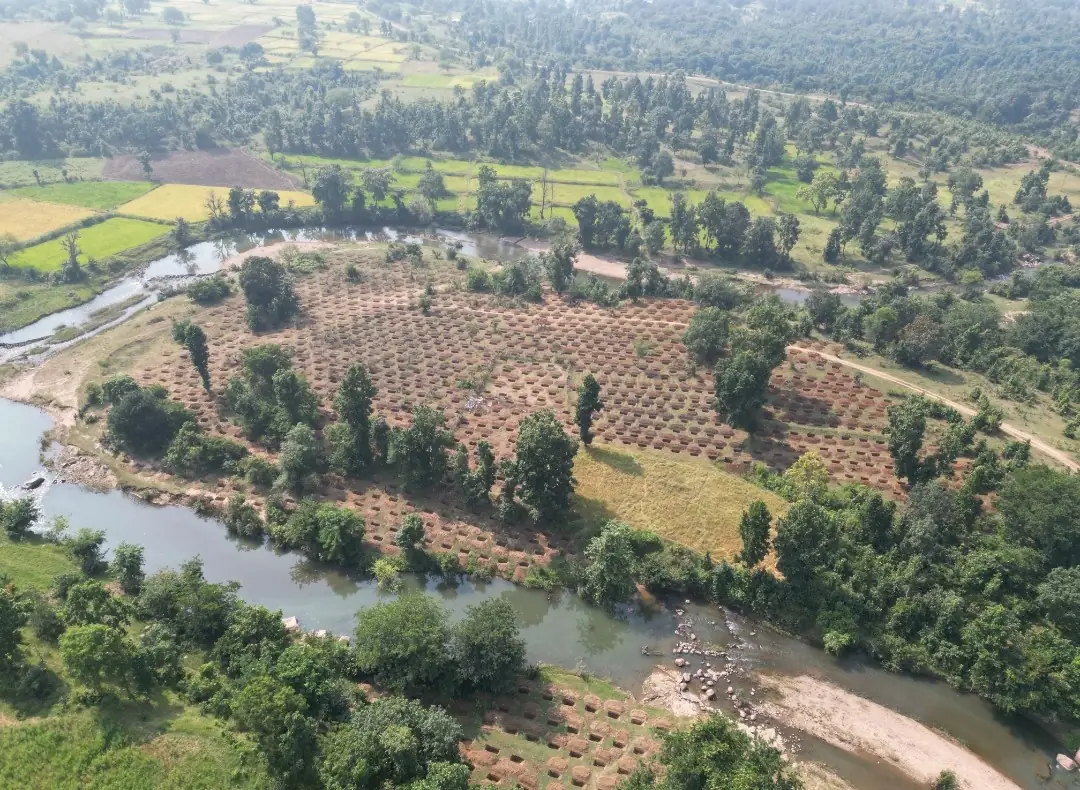
3 Thousand Contour Trenches Constructed in Dongri Tola of Marwahi Will Become a Strong Foundation for Water Conservation, 250 Families to Get Relief
Employment Generation Along with Water Conservation, Villagers Received 3166 Man-Days of Employment from Construction Work
Raipur, Water is life, and water conservation is the foundation of a secure future. Embodying this spirit, significant initiatives have been taken in Gaurela-Pendra-Marwahi district towards rainwater conservation and rural livelihood enhancement. In Dongri Tola of Gram Panchayat Darri, within the Marwahi development block, approximately 3 thousand staggered contour trenches have been constructed, developing a capacity to collect 24.30 lakh liters of rainwater. This initiative will not only help conserve rainwater and increase groundwater levels but also bring new hope for relief to about 250 rural families facing water problems during the summer months in the future.
Water Flowing from Hills Will Now Become the Basis of Water Conservation
In hilly and sloped areas, a large amount of water flows away during the rains. On one hand, this prevents the proper utilization of rainwater, while on the other hand, it also leads to problems like soil erosion and declining groundwater levels. Keeping these challenges in mind, staggered contour trenches have been constructed using scientific methods in Dongri Tola of Gram Panchayat Darri.
These trenches, built in a step-like sequence on the hill slopes, will slow down the flow of rainwater and collect it. The water collected in the trenches will slowly seep into the ground, thereby promoting groundwater recharge. This system is expected to ensure maximum utilization of rainwater and also help in the conservation of natural water sources.
Water Security to be Strengthened with a Water Collection Capacity of 24.30 Lakh Liters
The approximately 3 thousand contour trenches constructed in Dongri Tola have a total water collection capacity of 24.30 lakh liters. This capacity is a significant achievement in the direction of rainwater conservation in the area. The collection of water in these structures during the rains will help maintain moisture in the surrounding land, reduce soil erosion, and aid in groundwater recharge.
This initiative can prove important for the long-term water security of about 250 families, especially those facing water scarcity during the summer season. Improvement in groundwater levels is also likely to benefit nearby wells and other traditional water sources.
Employment Provided to Villagers Along with Water Conservation, 3166 Man-Days Generated
The specialty of this initiative is that along with environmental and water conservation, employment opportunities have also been created for local villagers. Approximately 150 to 160 laborers are being provided employment daily in the contour trench construction work. So far, a total of 3166 man-days of employment have been generated through the construction work.
Employment at the local level has provided a source of livelihood for the rural families. Thus, this water conservation work is proving useful in strengthening the rural economy along with the conservation of natural resources.
Happiness to Increase with Groundwater Recharge, Environmental Conservation to be Promoted
The construction of staggered contour trenches is also expected to help maintain environmental balance along with rainwater conservation. The absorption of rainwater into the ground will increase soil moisture, creating favorable conditions for the growth of surrounding plants and vegetation.
Along with this, controlling the flow of water during heavy rains will reduce soil erosion. Maintaining moisture in the land also holds the potential for improving water availability for agriculture and other local needs.
Dongri Tola Becoming a Confluence of Water Conservation and Rural Livelihood
The water conservation structures developed in Dongri Tola of Gram Panchayat Darri are an example of how scientific and planned management of natural resources can become the basis for positive change in rural areas. On one hand, permanent structures have been developed to conserve rainwater, while on the other hand, employment has also been provided to villagers at the local level through construction work.
This initiative, which instills hope for water security for about 250 families, can play an important role in strengthening groundwater conservation, environmental enhancement, and rural livelihoods in the coming times.