
Vishnu Government Increases Farmers' Pride - Agriculture Gets New Support
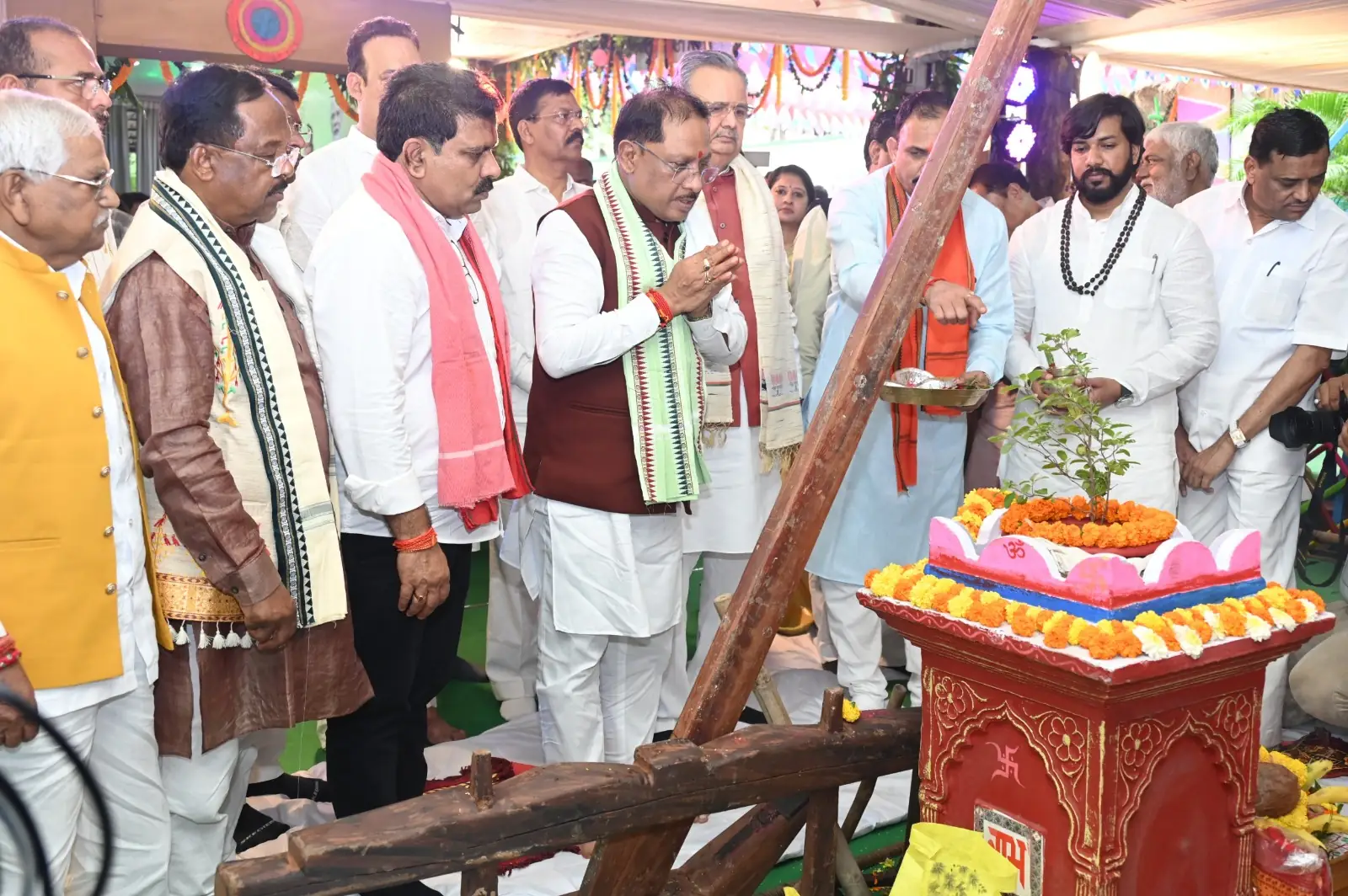
Hareli festival is connected with Chhattisgarh's agricultural culture, tradition and faith.
Special Article
• Chhagan Lal Lonhare, Joint Director Public Relations
Raipur, August 10, 2026/The state government is making every possible effort to strengthen the economic condition of farmers. Villages, the poor, and farmers are the government's top priorities. Agriculture contributes significantly to the country's GDP, agriculture is the mainstay of Chhattisgarh's economy, and Chhattisgarh is called the rice bowl. Under the leadership of Chief Minister Shri Vishnu Deo Sai, the policy decisions taken in the interest of farmers during the last two and a half years of the state government have given new strength to agriculture. In the last Kharif marketing year, 141.05 lakh metric tons of paddy were procured from farmers at support price. The Hareli festival holds special significance in Chhattisgarh. Hareli is the first festival of Chhattisgarh. This festival is traditionally celebrated with enthusiasm in rural areas. On this day, farmers worship the agricultural tools used in farming, and soil is worshipped in homes. Children and youth enjoy 'Gedi' in the villages. This festival has also increased the importance of Chhattisgarh's culture and folk festivals. Hareli festival is incomplete without Gedi in rural areas.
Under the leadership of Chief Minister Shri Vishnu Deo Sai, the state government has not only enhanced the pride of registered farmers by procuring paddy at a support price of 21 quintals per acre at Rs 3100 per quintal, but has also done remarkable work in taking farmers towards progress. Additionally, by transferring Rs 3716.38 crore, the pending bonus of paddy from the last two years of the Raman government to the farmers' accounts, their economic condition has been strengthened. The Chief Minister believes that India lives in villages. When farmers are prosperous, the state's trade and industry will grow.
Traditionally, for years, there was often an order for 'Gedi' at the carpenter's house before the Hareli festival in Chhattisgarh villages, and parents would somehow make 'Gedi' at the insistence of children. On the morning of the Hareli festival, the entire farmer family, elders, and children bathe their cows, bulls, and calves at the village pond and clean their farming tools, plough (Nangar), spade, shovel, and pickaxe, and decorate them for worship by spreading murrum in the courtyard. Mothers make sweet pancakes made of jaggery. After worshipping the agricultural tools with incense and lamps, offerings of coconuts and jaggery pancakes are made. They worship their respective deities in their homes. Thakurdev is worshipped in the village 'Gudi'.
On the day of the Hareli festival, medicinal dough balls are fed to livestock to protect their health. In the villages, the Yadav community collects tubers from the forest and provides herbal medicines for cattle to farmers on Hareli. The Yadav community boils herbs collected from the forest and gives them to farmers near the village's Saharadev or Thakursadev. In return, farmers traditionally offer gifts like rice and lentils to the Yadavs.
The Hareli festival is celebrated on the Krishna Paksha Amavasya of the month of Sawan. Hareli means greenery. During the rainy season, the earth is covered in a green carpet. The atmosphere appears lush green all around. By the time the Hareli festival arrives, most of the Kharif crop cultivation work is completed. Mothers make jaggery pancakes. Agricultural tools are washed, worshipped with incense and lamps, and then offered coconuts and jaggery pancakes. Thakur Dev of the village is worshipped and a coconut is offered to him.
hareli festival is inextricably linked with the tradition of climbing 'Gedi'. In rural areas, almost all families build 'Gedi'. Children and youth in the family greatly enjoy 'Gedi'. 'Gedi' is made of bamboo. Nails are hammered at equal intervals on two bamboo poles. Another piece of bamboo is split in half. These are tied with coconut rope to make two footrests. These footrests are actually pedals, which are tied above the nails hammered on the two previously cut bamboo poles. While walking on 'Gedi', a 'rach-rach' sound is produced, which makes the atmosphere more enjoyable. Therefore, farmers bathe and worship their livestock on this day. Wheat flour is kneaded into round balls, wrapped in castor or khamar leaves, and fed to the cattle as medicine. This is done to protect cattle from diseases. In the village, Raut, Lohar, and Baiga (traditional artisans and healers) stick neem branches at every doorstep. In the village, blacksmiths put nails on the doorframes to ward off evil. This tradition still exists in rural areas.
In the past decade, during the rainy season, there used to be mud in the village, and it was a different kind of joy to roam the streets on 'Gedi'. With the concreting of village lanes, the problem of mud has been largely resolved. On the day of Hareli, housewives prepare various types of Chhattisgarhi dishes in their kitchens. Farmers worship their farming tools like ploughs, sickles, axes, adzes, pickaxes, crowbars, and shovels, and offer Chhattisgarhi delicacies like 'Gulgul Bhajiya' and 'Gudha Cheela'. Additionally, 'Gedi' is also worshipped. In the evening, the youth and children play games like coconut throwing in the village lanes and various sports like Kabaddi in the village playground. Young women wear new clothes and enjoy playing games like 'Sawan Jhoola', 'Billas', 'Kho-Kho', and 'Fugdi'.
hareli festival is a symbol of social harmony. It is not just a religious or agricultural festival; it is a medium that unites all sections of society. Villagers collectively organize worship and events. On this day, wishes for happiness and prosperity are made for the family, and gratitude is expressed towards nature and livestock.