
Transform Rural India (TRI) partners with Chhattisgarh government to advance inclusive rural development
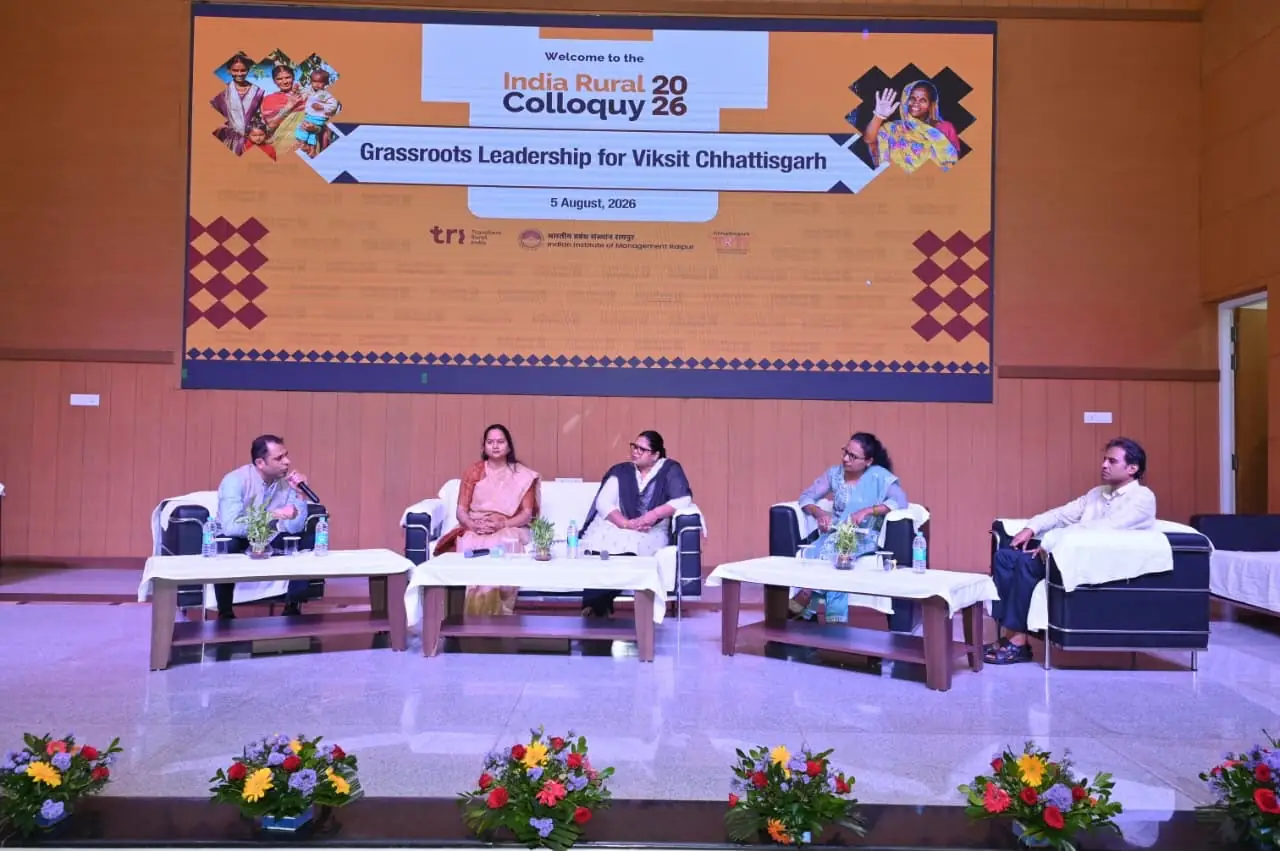
Transform Rural India (TRI) partners with the Chhattisgarh government to advance inclusive rural development Small farmers and women of self‑help groups are the real drivers of rural change": India Rural Colloquium 2026 Rahul Bhagat A report on Green Economic Transition (green economic change) has been released, outlining pathways to climate‑resilient and inclusive rural economies In its sixth edition, a platform was created to bring together government, community and development sector leaders to promote grassroots leadership, strong local governance and inclusive rural development in Raipur, the sixth 'India Rural Colloquium' (India Rural Symposium) Chhattisgarh chapter began with a strong appeal to recognize institutions led by small farmers and women as the foundation of rural transformation. The collaboration between TRI and the Chhattisgarh government strengthens the commitment to promote inclusive and community‑led rural development across the state. At the inauguration of the symposium in Raipur, the Secretary to the Chief Minister of Chhattisgarh and Secretary of the Good Governance and Convergence Department, Rahul Bhagat said, "Small farmers and women of self‑help groups are the real drivers of rural change. Their courage to take the first step inspires countless people to become change‑makers." The discussion brought senior government officials, community leaders, civil society organisations and development practitioners together at the Tribal Research and Training Institute in New Raipur. It revealed how strong grassroots leadership, accountable institutions and community knowledge can improve the future of rural Chhattisgarh. During the event, the 'Green Economic Pathways – Chhattisgarh' study report was also released, highlighting methods for building climate‑adapted and inclusive rural economies. In the keynote address, Padma Shri awardee Mr Budri Thati emphasized the importance of re‑establishing harmony between local communities and nature. He said, "Where change once seemed difficult, love and sincere effort brought transformation. Every person wants love and needs someone who truly understands them." Speaking on the importance of strong local institutions, Bhim Singh, Secretary of the Panchayat and Rural Development Department of the Chhattisgarh government stressed that sustainable rural development depends on effective grassroots implementation. He said, "Every government scheme is truly executed at the village level. If village institutions are not strong, development speed will remain limited." Established in 2016, Transform Rural India (TRI) has been working with rural communities to promote inclusive development based on local leadership. Entering its second decade in 2026, it is strengthening its gender‑equality focus and expanding community‑led models to advance equitable and sustainable development across rural India. Building on this vision, TRI organised a state‑level program of the India Rural Symposium on "Grassroots Leadership for a Developed Chhattisgarh". Policymakers, thinkers and grassroots representatives shared views on who will lead the next generation of rural transformation and discussed how public institutions can create enabling conditions for community development. A highlight of the symposium was the "Gram Samvad: Communities Shaping Rural India's Future" – the first discussion of its kind that placed community voices at the centre of policy debates. Women leaders, progressive farmers, elected representatives and grassroots institutions shared experiences on improving livelihoods, strengthening public systems and building resilient communities, and presented practical solutions based on real‑life realities. Based on this information, the "Solution Brainstorm Policy Innovation Lab" brought together expert teams from various sectors to craft policy proposals inspired by community knowledge. These ideas were presented before a distinguished jury of government officials, academicians, civil society and community representatives, revealing how grassroots experiences can inform large‑scale public policy and drive rural change. The Chhattisgarh dialogue emphasized the power of community leadership in shaping the state's rural future, discussing strong local governance, accountable public institutions, community‑based policy solutions and cross‑sector partnerships, and stressing the conversion of grassroots knowledge into scalable inclusive rural transformation methods. Professors Rahul Heiremth (IIT Raipur), Saty Lata Miri (Chair, District Council, Janjgir‑Champa), Hina Animesh Netam (Director, Tribal Research and Training Institute), Menka Chandrakar (Deputy Commissioner, Tribal Department), Ashwini Devangan (Mission Director, SRLM), Dr Sanjeev Parashar (Head, IIT Raipur) also addressed various sessions. About the India Rural Symposium: Transform Rural India (TRI) is bringing back the India Rural Symposium in 2026 with its sixth edition. Started as a virtual series, the event has become a national, multi‑state platform that convenes policymakers, industry leaders, academicians, civil society organisations and communities to discuss new ideas and concrete action plans for rural India. This year’s eight‑day symposium will be held in Assam, Madhya Pradesh, Uttar Pradesh, Chhattisgarh, Jharkhand and New Delhi, covering critical topics such as livelihoods, good governance, climate adaptation, gender equality, health, technology and local economic development. Insights from these deliberations will be turned into practical action plans for a prosperous future of rural India.