
Self-Reliance Woven with Silk in Narayanpur
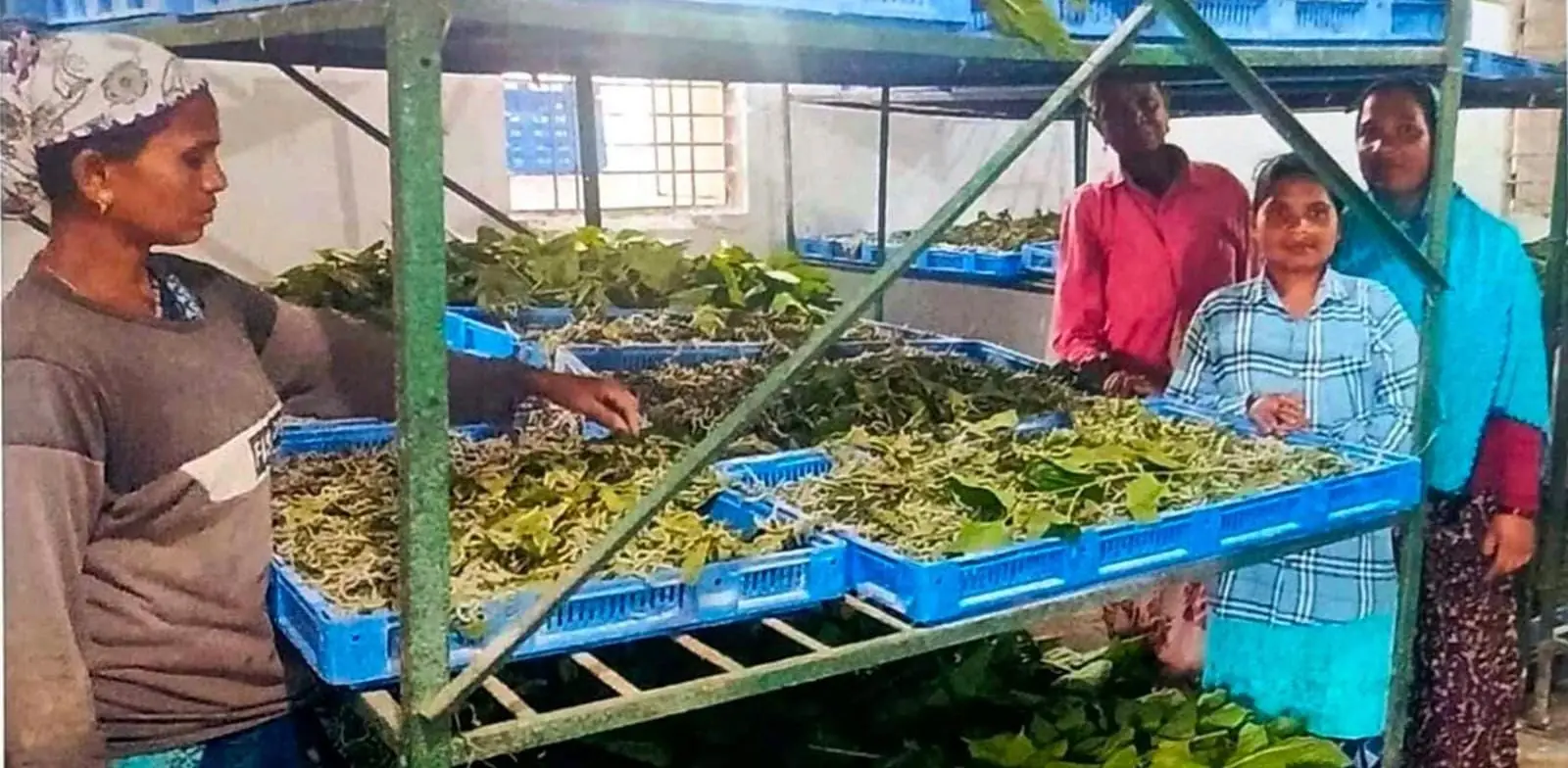
Narayanpur in the Vananchal district of Chhattisgarh, silk development and expansion plans are writing a golden new story of change in the lives of the rural people. Under the skillful guidance of the district administration and the collector, the Malbari and Tasar silk schemes have not only opened new livelihood doors at the local level, but also economically empowered women and youth by providing respectable employment in their own villages. Today silk production in Narayanpur is not just an agricultural-support activity, but has become a strong pillar of women’s empowerment, rural development and self-reliance. Malbari Silk: A Sustainable Income Source for Self-Help Groups In the two Malbari centres located in Narayanpur and Kusaltarai, about 22.5 acres have been developed for planting. Women self-help group members are rearing silk worms with advanced techniques. For the year 2025-26, a target of 4,400 kg of cocoons was set; a successful production of 4,180 kg was achieved. More than Rs 7.72 lakh was directly transferred to the bank accounts of 47 beneficiaries. Along with worm rearing, plantation protection and weeding kept the villagers employed throughout the year. Tasar Silk: Setting a New Record Beyond the Target In the four major Tasar centres – Narayanpur, Kusaltarai, Gotajunhri and Edka – covering 62 hectares, Tasar worm rearing this year achieved new dimensions of success. For 2025-26 the target was 8.52 lakh kg of cocoons; a bumper production of over 9.73 lakh kg was recorded. About Rs 36.97 lakh direct income was earned by 64 beneficiaries. Training, Transparency and Trust: Three Pillars of Success The Silk Department is providing not only resources but also timely technical guidance to the villagers. Continuous technical training is given to protect the worms from disease and produce quality cocoons. Direct and transparent payments are made to beneficiaries’ bank accounts, strengthening their confidence. Women of self-help groups have played a leading role throughout the process, improving their families’ economic status. This model proves that when local resources, administrative guidance and villagers’ hard work combine, even remote Vananchal areas can write a new chapter of development and self-reliance. In the future, the expansion of these schemes will not only lift more rural families out of poverty but also give Narayanpur a distinct and proud identity on the state’s silk map.