
Rural Fortunes Blooming with White Revolution: A New Saga of Self-Reliance Being Written in Dhamtari Through Cooperatives and Women Leadership
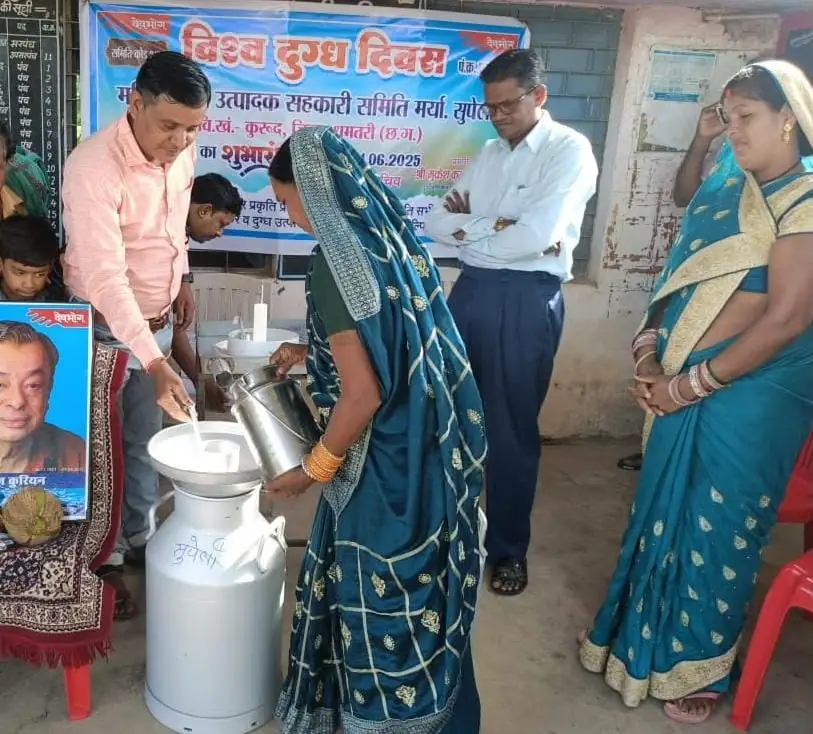
Raipur, Chhattisgarh's Dhamtari district was hitherto primarily known as the 'Rice Bowl', but today it is writing a new chapter of rural prosperity and economic self-reliance. The milk business, once limited to individual and unorganized levels, has now transformed into an organized movement through the collective efforts of the district administration, the National Dairy Development Board (NDDB), and local cattle rearers. This change is not just a story of increasing daily milk production but a unique confluence of scientific animal husbandry, cooperative spirit, and women's power, opening new paths to happiness in every village.
*Target 20,000 Liters: A New Canvas for Economic Strength*
Dhamtari is currently collecting about 10 to 15 thousand liters of milk daily, with an ambitious target to increase this to 20,000 liters per day. This figure is not just a number but a means to improve the lives of 5 to 6 thousand farmer families in the district, especially women cattle rearers. Concrete steps are being taken to increase milk prices from Rs 35-40 to Rs 50 per liter. Transparent systems through cooperatives, digital payments, and direct bank transfers ensure that cattle rearers receive the full and timely value for their hard work, thereby deepening the rural community's trust in the dairy business.
*The Seriousness of Cooperatives: Revitalized Societies Transforming the Landscape*
The strongest pillar of Dhamtari's dairy model is the spirit of cooperation. Milk societies that were dormant or inactive some time ago have been revived through a special campaign. Today, over 68 active milk producer cooperative societies are functioning in the district. This village-level network has enabled scientific milk testing, collection, and systematic marketing, eliminating the role of middlemen and directly benefiting farmers.
*New Vision Gained from Jharkhand and Gujarat*
The most beautiful aspect of Dhamtari's White Revolution is that its reins are in the hands of women. By joining self-help groups and women's milk cooperatives, women are now becoming successful dairy entrepreneurs, not just domestic cattle rearers. Under the guidance of NDDB, 43 women milk producers from the district studied the successful dairy model in Jharkhand, where they learned the intricacies of clean milk production and cooperative management. In a similar initiative, 19 progressive farmers and society officials from the district were sent to Mehsana (MIT) in Gujarat, the birthplace of Amul, to understand advanced breed improvement and modern processing techniques. These women and farmers, returning with modern experiences from Gujarat and Jharkhand, are now serving as role models and 'master trainers' for other villagers in Dhamtari.
*Processing and Modern Infrastructure to Provide a New Dimension*
After strengthening production and collection, rapid work is now underway on value addition of milk in the district. Chilling plants are already operational in Semra-B, Bhathagaon, and Mujgahan, while a new plant for the Kurud region has received the green signal. A large and modern milk processing unit is taking shape in the Chhati region of the district. Once operational, it will enable local processing of milk and the production of yogurt, paneer, butter, and packaged milk. This will not only reduce transportation costs but also develop Dhamtari's own dairy brand and create new employment opportunities for local youth.
*Expansion to Remote Villages: Dhamtari Towards Inclusive Development*
In line with the District Collector's vision, the scope of this dairy revolution is not limited to Dhamtari or Kurud. It is being extended to villages in tribal areas and remote regions like Nagari and Magarlod. Through advanced breed improvement (artificial insemination), regular vaccination, balanced animal feed, and financial assistance via Pashudhan Kisan Credit Card (KCC), the benefits of this scheme are being extended to the last person.