
Health Department Engaged in War Against Malaria in Forests, Preparedness Assessed in Sensitive Areas
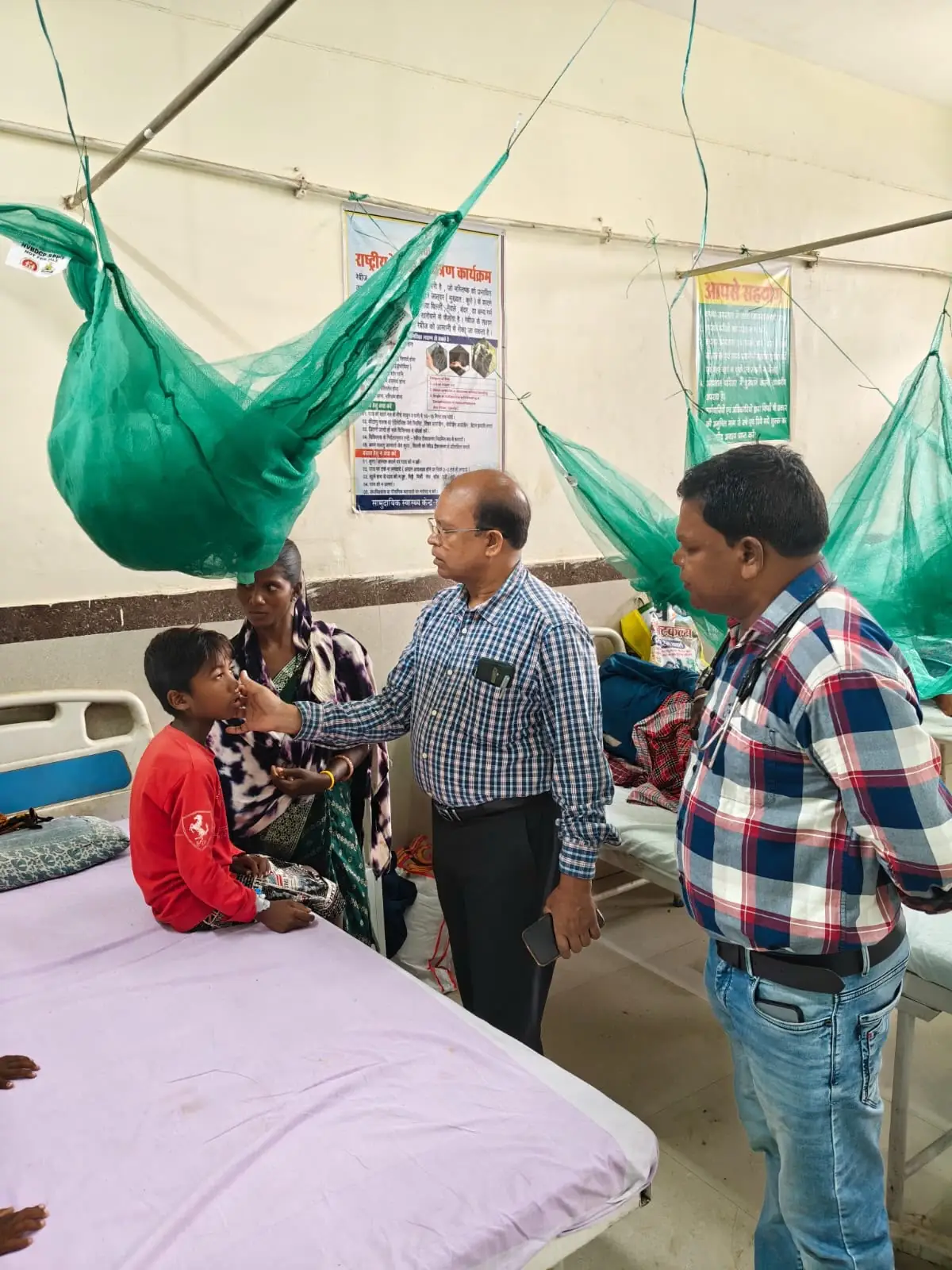
Field inspection of forest areas of Kota and Lormi, instructions given to ensure 100% surveillance, prompt testing and treatment.
Raipur, The Health Department has further strengthened surveillance and control activities in sensitive forest areas by giving top priority to the prevention of malaria and other vector-borne diseases during the monsoon season in the state. In this sequence, state-level officials conducted field inspection and supervisory oversight of remote forest areas of Kota development block in Bilaspur district and Lormi development block in Mungeli district. During the inspection, emphasis was placed on assessing the ground situation of malaria control activities and ensuring timely testing, treatment, and surveillance in every sensitive area.
During the inspection, officials visited remote forest area settlements including Achanakmar and Kota and minutely evaluated the malaria control activities being conducted there. Officials said that ensuring regular access to health services for families living in forests for their livelihood is among the top priorities of the department, so that no vulnerable population is deprived of malaria testing and treatment.
During the field visit, the district health staff were instructed to conduct 100% active malaria surveillance in all forest settlements and alternative residential areas, prepare a line listing of every family, ensure adequate availability of Rapid Diagnostic Test (RDT) kits and anti-malarial drugs, and to test and treat every suspected patient immediately. Instructions were also given to make regular field monitoring more effective and to maintain special surveillance in areas with potential infections.
During the inspection and supervision, a team comprising Divisional Joint Director Dr. Gayatri Bandhi, Chief Medical and Health Officer Mungeli Dr. Sheila Shah, Deputy Director Vector Borne Disease Control Program Dr. V.R. Bhagat, and District Malaria Officers of the concerned districts took a detailed overview of the activities being conducted in the field, the surveillance system, the availability of testing and treatment, and the working methodology of the field staff. Officials instructed that the Rapid Response Teams (RRT) formed at the district and development block level should be kept on a 24x7 alert mode. They were also asked to ensure that upon receiving information of a malaria cluster or potential outbreak from any area, the team reaches the spot within 24 hours and starts necessary control and prevention actions.
Every potential case of malaria is being taken seriously, with continuous field surveillance, regular review, and prompt intervention at the state level. The department's objective is to effectively control the spread of malaria during the monsoon season and ensure timely testing, treatment, and necessary health services for every citizen of the state, especially for families living in remote forest areas. The department has also given instructions to pay special attention to children suffering from fever and pregnant women, so that infections in vulnerable groups can be identified in time and effective treatment can be provided.