
Chhattisgarh's Folk Festival: Harela *Special Article*
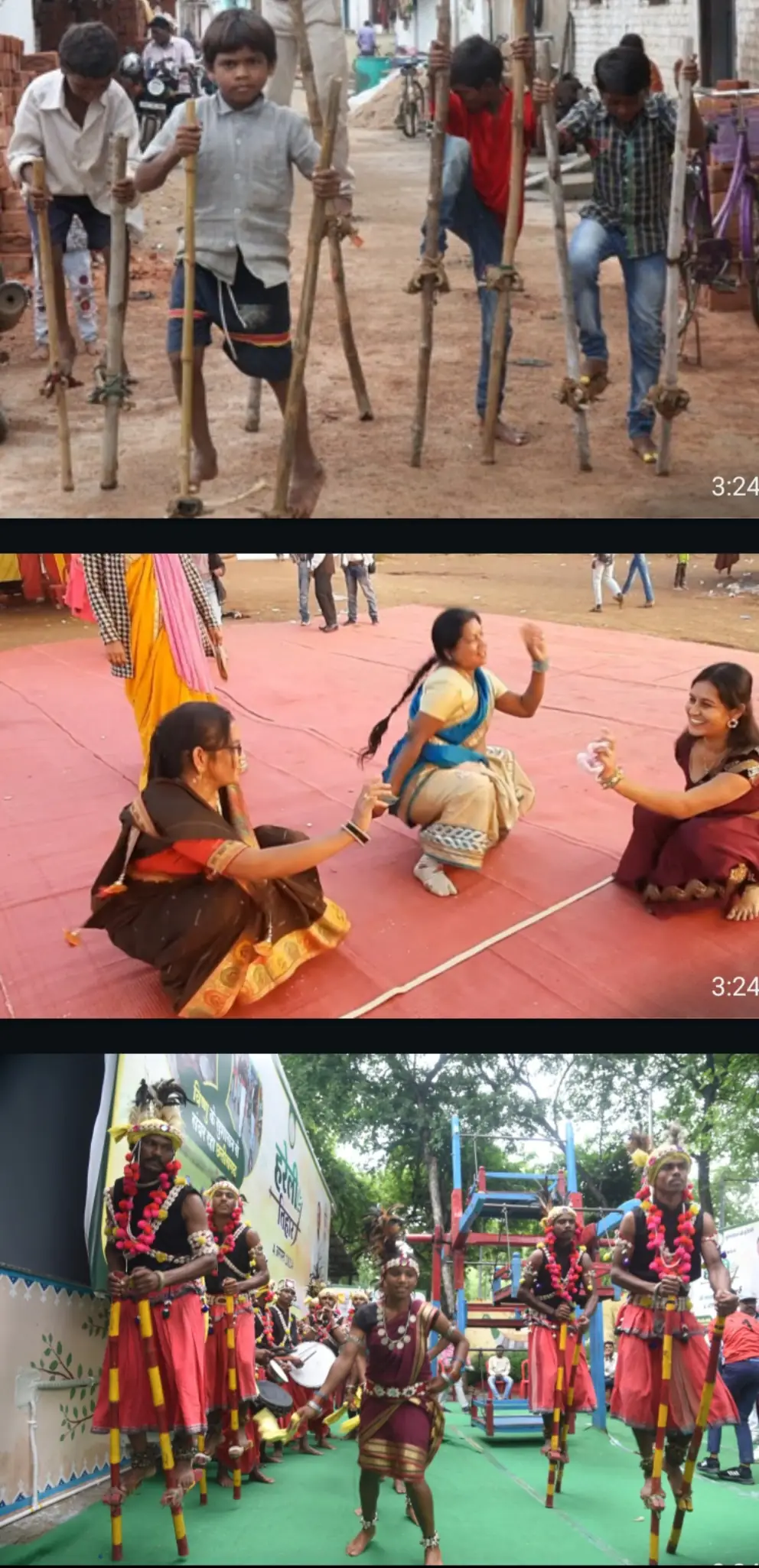
Special Article By Dhananjay Rathore, Joint Director, Public Relations
Chhattisgarh's culture has a rich tradition of folk festivals, reflecting a deep respect for nature, agriculture, and living beings. Among these festivals, the first and foremost is Harela. Celebrated on the new moon of the Sawan month (Hariyali Amavasya), this festival symbolizes Chhattisgarh's folk life, agricultural traditions, and love for the environment. Chhattisgarh is known not only for its nature but also for its rich folk culture and traditions. Folk life in Chhattisgarh is abundant with festivals and celebrations. Almost every month, a festival captivates the local populace. These festivals not only bring joy and happiness but also provide opportunities for sports and entertainment. The greenery of nature is fully integrated into the folk life of Chhattisgarh. Whether it's Harela, Bhojali, Jaware, or Basant Panchami, all festivals reflect nature's delightful and unparalleled beauty. In this beauty, the joy and enthusiasm of life's four stages are scattered in various colors. Perhaps the greenness of 'Harela' makes us feel more deeply the natural verdancy in our traditions, our customs, and our folk life. It is wished that this greenness of Harela spreads and brightens everyone's life. It is also wished that beyond the dazzle of materialism, our traditional sports remain alive so that the rural folk, connected to the soil, remain physically and mentally robust. May the earthy aroma of the soil continue to emanate from our folk songs, and may this continuous stream of sports tradition keep flowing. 1. Meaning and Significance of the Word 'Harela' The word 'Harela' is derived from 'Hariyali' (greenery). In the month of Sawan, when lush green crops and vegetation flourish in fields and plains, farmers celebrate this festival with joy. It is considered the first festival of Chhattisgarh, marking the beginning of a series of major folk festivals in the state. 2. Worship of Agricultural Tools and Livestock Harela is primarily a day to express gratitude to farmers and their agricultural tools: • Worship of Agricultural Implements: The roots of Harela are deeply embedded in the agricultural heritage of the Chhattisgarh region. It is a celebration as well as a spiritual offering. After completing their agricultural tasks with nature, rain, and their work, farmers wash their tools – plough, spade, hoe, sickle, axe, saw, etc. They place them on a seat of clean murmi (reddish soil), decorate them with puja materials, offer rice flour paste, sandalwood, flowers, incense, lamps, and offer 'cheela' (a type of pancake) and coconut, praying with deep emotion: 'O Plough, embodiment of Balram, symbol of immense power, Lord of the land, you have shaped Mother Earth and aided us in service. After the sowing and transplantation, greenery has spread all around; infinite thanks. Your task is done, rest. We have caused you much hardship and work, forgive us. May your mercy always be upon us. Similarly, requests are made for other tools according to their function. The worship of 'Gedi' (stilts) is done, wishing for strength and protection of legs.' • Honor for Livestock: Livestock plays a crucial role in the economy of farmers. In India, farmers adopt mixed farming systems, combining crops and livestock. In Chhattisgarh, a large number of people, being less educated and unskilled, depend on agriculture for their livelihood. Bullocks are the backbone of Chhattisgarh's agriculture. Farmers, especially marginal and small farmers, rely on bullocks for ploughing, transportation, and the movement of both produce and inputs. • The true companions of farming, cows and bullocks, are specially cared for. They are bathed, their Aarti (a ritual of waving lamps) is performed, and they are fed 'Gahunta' (a nutritious mixture made of flour, salt, and herbs) to keep them free from diseases. Medicine prepared from herbs is taken to the 'Gauthan' (cattle shed) and fed to the animals along with salt and balls of rice or wheat, wrapped in Arandi and Khamhar leaves. Arandi and Khamhar leaves are medicinal and help ward off airborne diseases. Salt acts as a catalyst, and the rice or wheat makes the medicine more effective. This keeps the livestock healthy; it's a form of vaccination. 3. Traditions and Customs • Joy of Walking on Stilts ('Gedi'): 'Gedi' (stilts) hold significant importance in this festival. Thick bamboo poles and footrests are securely tied using a special technique. The origin of 'Gedi' can be found in ancient scriptures. Balram and Krishna used to climb 'Gedi' with their friends, as seen in Krishna's life stories. Various games, such as 'Gedi' races, 'water feeding', 'standing on one leg', and 'hopping on one leg', have been organized since ancient times and continue to this day. This tradition, which began as a means of walking on muddy and waterlogged paths during the rainy season, has now become an entertaining sport. • Organization of Various Competitions: During Harela, coconut throwing competitions are held in villages and towns. After the morning prayers, groups of young people gather in village squares and organize coconut throwing competitions. This game of winning and losing coconuts continues late into the night. 'Gedi' races are organized in villages. Sometimes Kho-Kho, Fugdi, Billas, Atti-Patti, and Danda Pachranga games are also organized. Whether it's the village 'Gauthan' or the school ground, or the road outside the village, people are seen dressed in colorful attire. • Charms and Protective Measures: According to belief, neem leaves are tied to the main doors of houses on this day to protect the village from evil eye and diseases. Lohars (blacksmiths) place neem branches and iron nails on the doorframes of houses. Local belief holds that this provides protection to the house from evil forces and illnesses. This practice is inspired by the known medicinal properties of neem and its role in traditional beliefs about rural health. • Dishes Prepared during Harela: Primarily, traditional dishes like 'Cheela' (pancakes) made with jaggery, 'Airsā', 'Chausela', and 'Bobra' are prepared and distributed. Traditional Chhattisgarh dishes such as 'Gulgula Bhajiya', 'Gudha Cheela', 'Sohari', 'Bada', 'Thethari', 'Khurmi', and 'Bobra' are made. These dishes are offered to agricultural tools and cattle. Special enjoyment of Chhattisgarh's cuisine is experienced on this day. 4. Cultural and Social Message Harela is not just a religious or folk ritual; it signifies the unbreakable bond between humans and nature. This festival teaches that it is our utmost duty to express gratitude towards nature and livestock that provide us with life and food. In the present time, the Chhattisgarh government is doing commendable work in preserving this folk-cultural heritage by declaring Harela a public holiday and promoting traditional sports (like 'Gedi' races) under the 'Chhattisgarhya Kranti' (Chhattisgarh Revolution) initiative.