
Advancing Towards Self-Reliance Through Medicinal Khus Cultivation
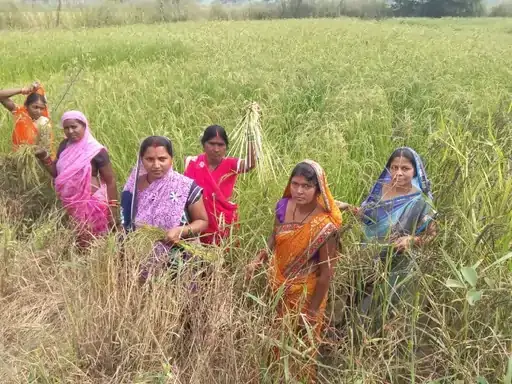
Advancing towards self-reliance through medicinal khus farming Service Sankalp Campaign The women’s group in Parakhanda has written a new chapter of success through collective effort The first khus harvest generated an income of 1.12 lakh rupees Raipur – When women shifted from traditional farming to cultivating khus, a medicinal and aromatic crop, they not only increased their earnings but also brought a significant change to the rural economy. This illustrates women’s economic empowerment, agricultural innovation and a remarkable example of self‑reliance. Khus is a medicinal plant whose scented oil commands a high price. The oil extracted from its roots is used in sherbets, paan masala, tobacco, perfume, soap and other cosmetic products. Its dried roots are used for fragrance in linen and clothing. In addition, khus is used as a medicine in traditional systems such as Ayurveda. 1.12 lakh rupees income from producing 11.20 quintals of khus Traditionally limited rural women are now exploring new farming practices to create new livelihood pathways. Under the Service Sankalp Campaign, women of the self‑help group ‘Dhan Ke Katora’ producer committee in the village of Parakhanda, Kurud block, Dhamtari district, Chhattisgarh adopted khus cultivation and set an example of change. The group cultivated khus on 2.50 acres and, in the first harvest, produced 11.20 quintals, earning an income of 1.12 lakh rupees. This achievement is not only an economic success for the women but also a case of diversification and collective livelihood potential in agriculture. Moving beyond traditional crops, they chose a new path, producing 11.20 quintals of khus in the first season. Agriculture holds a vital place in the rural economy, but evolving times require diversified income sources for farmers and rural families. With this mindset, women of Parakhanda combined traditional crops with medicinal and aromatic ones. For the women of the Dhan Ke Katora committee, khus farming was a new experience. New crop challenges were met with collective labour, regular care and a willingness to learn, resulting in a first‑season harvest of 11.20 quintals. Sale of the harvested khus fetched 1.12 lakh rupees, encouraging the women and confirming that local resources and available land can be used better to give agricultural livelihoods a new direction. The biggest strength of this success is the collective effort of the group’s women. By joining a self‑help group they went beyond savings and loan activities, adopting collective production, crop management and marketing. Income from khus farming boosted the women’s confidence in economic activities and helped them realize that moving beyond traditional crops to demand‑driven, medicinal and value‑added crops can create new income opportunities. Mixed tree‑planting on six acres alongside farming for environmental protection In Parakhanda, six acres have been planted with mixed trees under the scheme. The aim is to expand green cover in the rural area while promoting conservation of natural resources and biodiversity. Combining mixed afforestation with medicinal farming broadened the initiative’s scope. While tree‑planting supports environmental balance and green cover, medicinal crops create livelihood opportunities for rural families. This model in Parakhanda embodies the concept of ‘livelihood enhancement with environmental protection’. After khus, turmeric cultivation has broadened the livelihood scope. Following the encouraging results of the first crop, the group expanded activities to include turmeric alongside khus. Growing multiple crops offers more than one source of agricultural income, reduces reliance on a single crop and makes better use of land. In the future, organised production, value addition and better marketing could further increase the group’s earnings. The journey from field to self‑reliance The story of Parakhanda’s women is not just about 11.20 quintals of khus and 1.12 lakh rupees of income; it is a story of transformation where rural women move from beneficiaries to operators of livelihood activities. What began as a small experiment in khus farming has become a platform for confidence, collective action and economic potential. New farming experiments, better use of resources, collective participation and environmental conservation together shape Parakhanda’s initiative into an inspiring rural livelihood model. Today, Parakhanda’s women convey that when collective effort, new thinking and proper use of available resources unite, fields not only grow crops but also write new stories of confidence, opportunity and self‑reliance.