

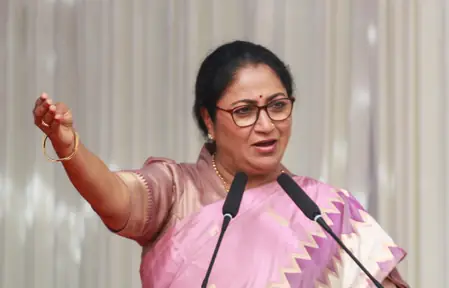
In a game-changing announcement, Delhi Chief Minister Rekha Gupta unveiled a visionary blueprint to unify major hospitals into autonomous powerhouses akin to AIIMS. Speaking on Sunday, she highlighted how merging GTB Hospital, Delhi State Cancer Institute, and Rajiv Gandhi Super Speciality Hospital will revolutionize health services and medical education.
Parallel efforts aim to rebrand IHBAS as NIMHANS-2, bolstering national expertise in mental health and neurology. The core strategy targets a massive expansion of postgraduate seats by integrating duplicate departments. Right now, resources are fragmented, with faculty spread thin across institutions.
By consolidating professors, the government can leverage their expertise more efficiently. Per regulations, faculty strength directly correlates with PG capacity, promising jumps in high-demand fields. Radiology seats, previously scarce, could hit 22; pathology 26; and anesthesia a whopping 48, aided by recruiting for open posts.
Untapped potential in niche areas will flourish too. DSCI’s radiation oncology, nuclear medicine, and related units may introduce 26 fresh PG positions. RGSSH will follow suit in heart-related specialties with 14 new slots. This isn’t just addition—it’s activation of dormant capabilities.
The ripple effects include scaling up MBBS admissions as infrastructure grows: more beds, higher footfall, expanded staff. Future developments encompass hostels, cutting-edge labs, and modern lecture halls to nurture world-class medical professionals.
CM Gupta underscored the triple focus: superior patient care, advanced education, and pioneering research. ‘Delhi will emerge as the nation’s medical beacon,’ she affirmed, ensuring optimal use of talent, tech, and facilities for groundbreaking healthcare advancements.