

Siem Reap’s Angkor Archaeological Park isn’t just a tourist hotspot—it’s a living bridge between India’s ancient wisdom and Cambodia’s Khmer legacy. Angkor Wat, the crown jewel, was erected in the 12th century as a Vishnu temple by Suryavarman II, boasting unparalleled scale and artistry across 400 acres.
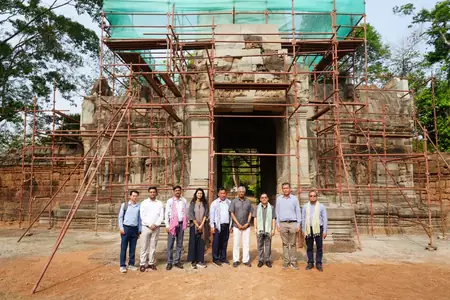
Fast-forward to modern times: India’s Archaeological Survey of India (ASI) leads the charge in restoring Ta Prohm, the ‘Tomb Raider’ temple famous for its tree-strangled ruins. Dedicated by Jayavarman VII to his mother, this Mahayana Buddhist site was originally a thriving monastery and university.
MEA Secretary (East) P. Kumaraswamy’s recent inspection of both temples spotlights this partnership. Photos capture him admiring the architectural marvels, from Angkor Wat’s grand bas-reliefs to Ta Prohm’s dramatic root entanglements.
India pioneered Angkor Wat’s revival in the late 1980s, setting a precedent for international cooperation. Now, ASI teams work alongside Cambodian authorities, delicately balancing restoration with the site’s natural allure. This initiative not only preserves history but also boosts cultural exchange.
With UNESCO recognition amplifying its global draw, these efforts highlight how shared heritage can unite nations. As conservation progresses, expect enhanced accessibility and deeper insights into 12th-century Khmer society.