

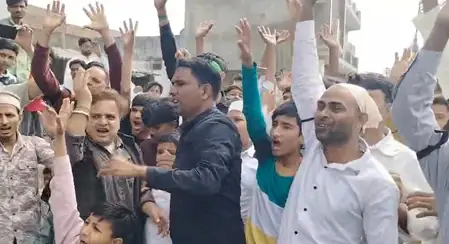
Sambhal’s Shia faithful turned Eid celebrations into a mournful stand against perceived injustice on March 21, donning black armbands during Friday prayers to honor Ayatollah Ali Khamenei. The Iranian leader’s purported demise in a US-Israel joint operation has sparked a national outcry, transforming a joyous occasion into one of solemn defiance.
At the Sirsi locality, the atmosphere thickened with anti-US sloganeering after namaz, prompting a robust police deployment. Tensions flared briefly in verbal exchanges, but swift intervention kept the peace intact.
Spokespersons from the community described the black attire as a heartfelt emblem of loss and collective resolve, rooted in religious customs. The subsequent rally amplified these sentiments, marching in tribute and condemnation alike.
Echoes of this unrest reverberate nationwide. Reports of Khamenei’s death have mobilized Muslim groups from north to south. Kashmir erupted in fervor across multiple districts, with protesters railing against American and Israeli policies. In Lucknow, tearful women brandished Khamenei’s images amid rallying cries near sacred sites. Ludhiana’s sparse Shia population matched the intensity with effigy burnings. Ajmer’s three-day blackout of festivities underscored the grief, and Chikkaballapur’s self-imposed shutdowns evoked Khamenei’s past visit to the area.
These developments highlight how international flashpoints infiltrate local religious practices, testing India’s commitment to harmonious public expressions amid global tensions.