

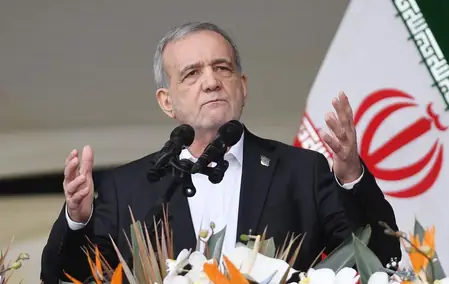
Tehran is sending a clear signal of reconciliation. President Masoud Pezeshkian, in his Eid al-Fitr and Nowruz address, rejected any notion of war with Muslim countries, calling them ‘our brothers’ and blaming U.S. and Israeli interference for ongoing frictions.
The message, delivered on March 21, coincides with joyous occasions: Eid marking Ramadan’s close and Nowruz heralding spring and renewal. Pezeshkian tackled head-on the recent spike in tensions following deadly U.S.-Israel attacks on Iranian soil last February, which prompted fierce Iranian counterstrikes.
‘Neither conflict nor war is what we want with Muslim nations,’ he asserted. Looking ahead, he advocated dialogue to settle neighborly disputes and floated the idea of a unified Muslim security alliance in the Middle East. This body, he envisioned, would handle defense, economic ties, cultural exchanges, and political coordination without outsider involvement.
‘No need for external forces—we Muslims can build our own Islamic assembly,’ Pezeshkian proclaimed. He also defended Iran’s nuclear program as strictly civilian, bound by Khamenei’s fatwa prohibiting weapons development. Dismissing American claims as propaganda, he stressed Tehran’s commitment to transparency.
These declarations arrive at a pivotal moment, as the region grapples with the aftermath of crossfire exchanges. Iran’s proposal could pave the way for de-escalation, urging Arab states to prioritize intra-Muslim solidarity over proxy battles fueled by Washington and Tel Aviv. Observers watch closely to see if this diplomatic outreach gains traction amid fragile ceasefires.