

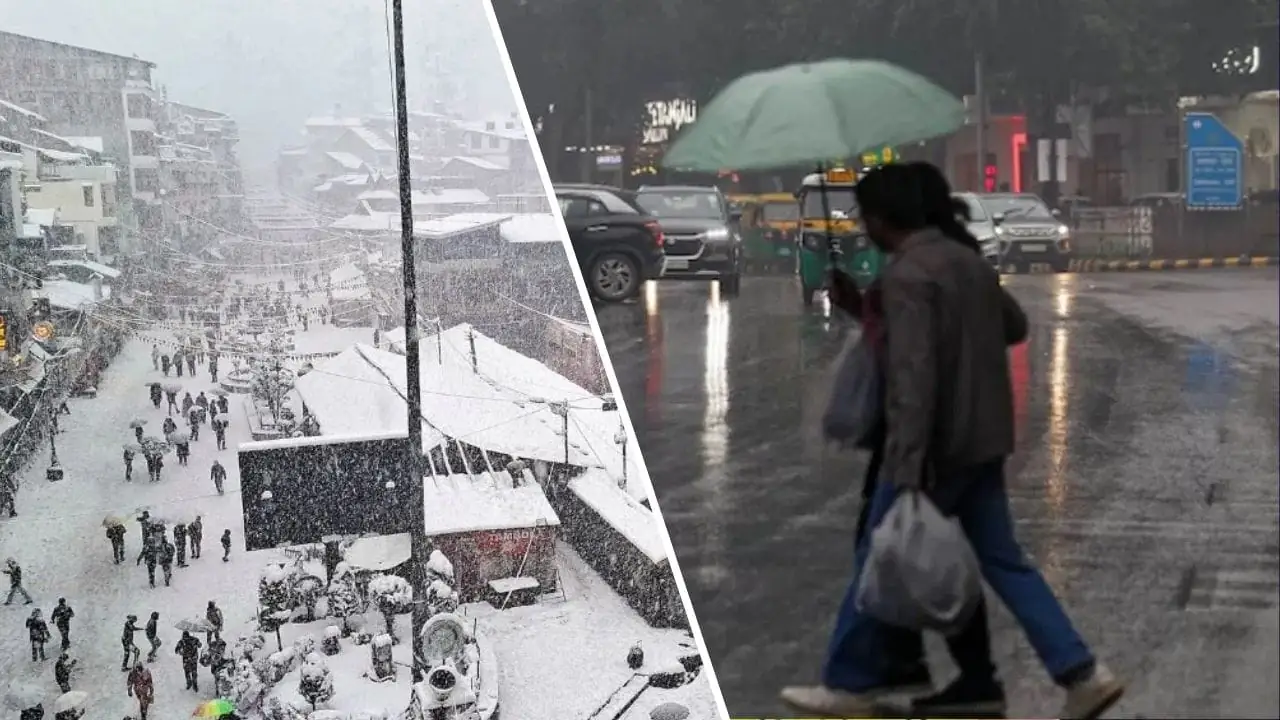
A dramatic weather turnaround has gripped northern India, with Delhi logging its coldest March day since 2020. Friday’s maximum temperature plummeted to 21.7°C in the capital, down sharply due to relentless rain and blustery winds, as per IMD data. This beats the previous low of 21.2°C from March 8, 2020, signaling an extended winter-like spell.
Looking ahead, Delhiites can expect cooler conditions with lows at 14°C and highs at 27°C on Saturday, plus possible drizzle on March 23. The rains have cleansed the air, pushing AQI to a comfortable 93—the best since early October 2025. This respite from pollution offers much-needed relief in a city long plagued by smog.
Hill stations are in chaos from intense snowfall. Himachal’s Manali and Lahaul-Spiti, along with Rohtang Pass, are buried under nearly a meter of snow, leading to landslide-induced roadblocks and travel bans. Uttarakhand’s sacred sites Kedarnath and Badrinath saw four feet of snow, halting access and prompting rescue preparations. More rain and snow with thunder are forecast for March 23 and 26.
Rain alerts blanket 15 states amid active weather systems. Northeast India braces for showers in Nagaland, Manipur, Mizoram, Tripura on March 21, escalating to heavy rain in Assam, Meghalaya, Arunachal by March 24. East and central regions like West Bengal, Sikkim, Odisha, and Jharkhand face high winds (50-60 km/h), thunder, and scattered hail through March 24.
South India’s Andhra Pradesh, Telangana, Karnataka, Tamil Nadu, Kerala, and Puducherry prepare for thunderstorms and light rain over the next two days. Central Maharashtra eyes moderate showers with hail risks on select dates. In the north, Punjab, Haryana, Chandigarh, and UP suffer from plummeting mercury—Chandigarh at 18.8°C, Lucknow 23.5°C. UP’s 27 districts are under orange alert for heavy showers, courtesy of western disturbances.