

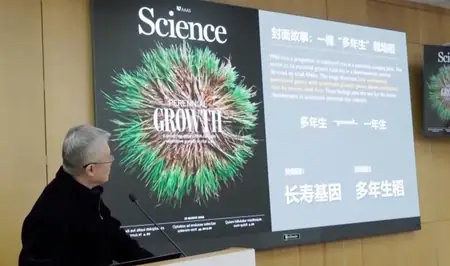
Chinese researchers have cracked the code of nature’s resilience by engineering ‘longevity rice’ from wild varieties, a perennial crop that yields harvests year after year from a single planting. After years of rigorous study, they’ve isolated the primary gene enabling wild rice’s perpetual growth, publishing their feat on Science magazine’s front cover.
While everyday rice demands yearly sowing and is prone to soil depletion, wild rice thrives as a rugged, self-renewing perennial. The team at the Chinese Academy of Sciences screened hundreds of wild strains, using advanced biotech tools to clone the vital gene that confers this multi-year productivity.
China’s diverse landscape, dotted with hilly farmlands in its southwestern, northeastern, and northwestern provinces, stands to benefit immensely. These areas grapple with steep slopes where traditional annual crops falter. The new rice variety addresses this head-on, minimizing replanting efforts, curbing expenses, and fortifying food reserves against uncertainties.
This development not only elevates China’s agricultural prowess but also offers a blueprint for sustainable farming globally. By mimicking wild resilience in cultivated crops, scientists pave the way for eco-friendly practices that could mitigate famine risks and adapt to changing climates.