

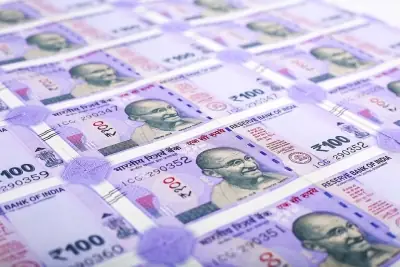
Mumbai’s financial markets witnessed history on Friday as the Indian rupee crossed the dreaded 93 barrier against the dollar for the first time, touching a record low of 93.12—a 0.55 percent drop from its previous close of 92.63. This milestone signals deepening concerns over international flashpoints rippling through currency trades.
The trigger? Intensifying conflicts in the Middle East between Iran, the US, and Israel, which have battered the rupee by about 2 percent since their onset. High crude oil prices, a lifeline for India’s trade deficit, continue to exacerbate the slide, pushing traders into safe-haven dollar buying.
Analysts at Enrich Money highlight that levels above 92.8 indicate persistent pressure, with potential for accelerated weakness if 93.00 holds firm. CEO Ponnemudi R identifies key zones: resistance between 93.20 and 93.40, and supports at 92.70 down to 92.40-92.50.
Equity benchmarks offered some counterbalance, with the Sensex jumping more than 900 points (1 percent) and Nifty advancing 300 points (1.35 percent). But FII outflows persisted, with Thursday’s net selling at 7,558.19 crore rupees in equities, reflecting caution amid global jitters.
Oil prices provided tentative relief, declining after US Treasury Secretary Scott Bessent suggested possible relaxations in sanctions on Iranian oil to stabilize supplies. WTI crude traded 1.67 percent lower at 93.65 dollars per barrel, Brent at 107.3 dollars with a 1.20 percent drop.
Even with this pullback, crude benchmarks have skyrocketed 40 percent in the past weeks amid West Asian unrest entering day 21. From March 2’s 77.74 dollars, Brent hit 108.65 dollars by March 19. For India, heavily reliant on oil imports, this rupee depreciation spells higher inflation risks and economic headwinds ahead.