

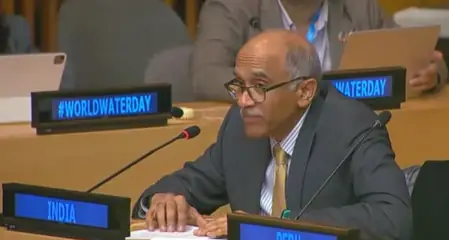
At the United Nations, India drew a clear line in the sand over the Indus Waters Treaty during World Water Day observances. Permanent Representative P. Harish announced the pact stays paused until Pakistan ditches its terrorism sponsorship—a non-negotiable precondition for resumption.
‘Pakistan must respect human life’s sanctity before lecturing on treaty holiness,’ Harish declared Thursday. Accusing Islamabad of weaponizing terror as statecraft, he stressed India’s role as a dependable upstream neighbor demands reciprocity.
The sharp rebuttal targeted Pakistan’s narrative of victimhood amid discussions on universal access to safe water and sanitation, key SDG pillars. Harish recounted India’s 1960 treaty signature amid amity, shattered by Pakistan’s three invasions and relentless terror campaigns claiming tens of thousands of Indian lives.
Post the deadly Pahalgam attack by The Resistance Front last year, India hit pause on the treaty. ‘Tolerance failed to reform them; suspension enforces accountability until terror support ends permanently,’ Harish explained.
Regional transformations over decades—tech advances, population booms, ecological strains—necessitate updates Pakistan stubbornly rejects, stonewalling India’s amendment bids.
On a positive note, Harish spotlighted India’s Jal Jeevan Mission triumph: since 2019, safe piped water flows to 81.76% of rural homes (1.58 crore households), powered by women-led village committees handling everything from design to upkeep.
World Water Day falls on Sunday, March 22 this year. India prioritizes SDG universal access, advocating UN collaboration on capacity-building, innovation, and science sharing to bridge divides and solve shared water woes effectively.