

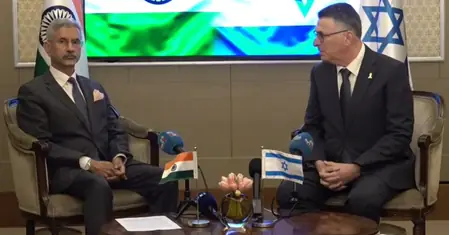
In a significant move amid rising Middle East volatility, Indian Foreign Minister S. Jaishankar conversed via telephone with Israeli Foreign Minister Gideon Sa’ar on Thursday. The leaders delved into the persistent strife in West Asia and its cascading effects on international security and economy.
Post-conversation, Jaishankar shared on X: ‘Had a telephone conversation this evening with Israel’s Foreign Minister Gideon Sa’ar. We exchanged views on the conflict underway in West Asia and its many implications.’
The timing is critical, following the February 28 U.S.-Israel airstrikes on Iran that killed Supreme Leader Ayatollah Ali Khamenei and senior military figures. Iran responded aggressively with drone and missile assaults on U.S. and Israeli installations, regional hubs, and proxy forces, deepening the crisis.
Jaishankar’s diplomatic calendar has been packed. He recently spoke with foreign ministers of Russia, Iran, France, and Oman, reflecting India’s sustained engagement with stakeholders to assess risks and explore stability measures.
That same day, he met UAE’s Reem Al Hashimy to review conflict updates. Jaishankar thanked the UAE for safeguarding Indian expatriates, tweeting: ‘Pleased to meet UAE’s Minister of State for International Cooperation Reem Al Hashimy today afternoon. Expressed thanks to UAE govt for care of Indian community. Discussed recent events in West Asia conflict.’
Just days prior, on March 16, interactions with Ursula von der Leyen in Belgium addressed West Asia and Ukraine dynamics. Jaishankar commended her perspectives, stating on X: ‘Great to meet EC President Ursula von der Leyen. Her January India visit marked a milestone in ties. We’re advancing rapidly. Value her take on current global issues.’
India’s flurry of high-level talks signals a strategic approach to mitigate the conflict’s fallout, ensure citizen safety, and advocate for dialogue. As tensions simmer, New Delhi’s voice gains prominence in pushing for restraint and resolution.