

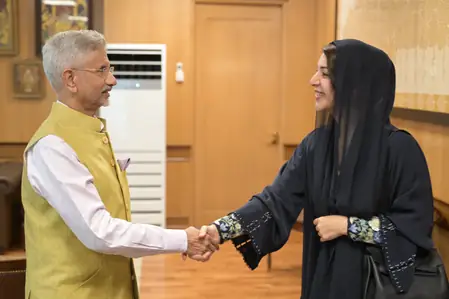
In a timely diplomatic outreach, India’s Foreign Minister S. Jaishankar convened with UAE’s Reem Al Hashimy in New Delhi on Thursday, addressing the spiraling West Asia conflict head-on. The discussions delved into recent escalations following the February 28 US-Israel assault on Iran, which felled Ayatollah Khamenei and senior commanders, prompting Iran’s retaliatory drone and missile barrages on enemy installations.
Jaishankar profusely thanked UAE authorities for their vigilant protection of Indian residents caught in the crossfire. His X post captured the essence: delight in the meeting, appreciation for community care, and a review of conflict updates.
This follows PM Modi’s Tuesday call with UAE President Sheikh Mohamed bin Zayed, where he vehemently denounced assaults on UAE that killed innocents and wrecked civilian assets. The duo concurred on safeguarding the Strait of Hormuz for seamless shipping, vital for world commerce.
Modi’s X update conveyed Eid wishes, repeated condemnations, and a pledge to collaborate for peace, security, and stability. Their March 1 exchange had similarly voiced India’s support in adversity.
The conflict’s ripple effects threaten regional capitals and allied forces, amplifying concerns for over 3 million Indians in the Gulf. India’s dual track—diplomatic pressure for ceasefires and welfare checks—exemplifies balanced foreign policy.
With energy routes at stake, these talks bolster the India-UAE strategic alliance, rooted in trade volumes exceeding $80 billion annually. As tensions simmer, such engagements pave the way for collective action toward de-escalation and reconstruction in West Asia.