

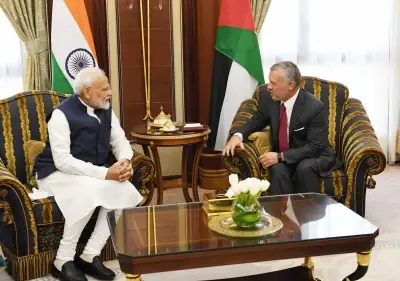
In a bid to address the brewing storm in West Asia, Indian Prime Minister Narendra Modi connected via phone with Jordan’s King Abdullah II for the second time this month. The Thursday dialogue focused on the precarious security landscape gripping the Middle East.
Both leaders voiced profound apprehension regarding recent developments. They advocated strongly for renewed conversations and diplomatic channels to swiftly reinstate calm and order in the area. Modi conveyed early Eid felicitations and praised Jordan’s role in evacuating Indian nationals safely from harm’s way.
Sharing insights on X, the Prime Minister emphasized their mutual stance against strikes on vital energy sites, deeming them reprehensible and a catalyst for heightened strife. India and Jordan remain steadfast in supporting seamless transit of energy resources and goods, he affirmed.
The exchange unfolded amid a flare-up that began with US-Israeli attacks on Iran on February 28, claiming the lives of Ayatollah Ali Khamenei and key military figures. Iran’s counterstrikes targeted American and Israeli installations with drones and missiles. This follows their initial chat on March 2.
Modi’s diplomatic marathon continues unabated. Recent calls to heads of state in Malaysia, Oman, France, Kuwait, UAE, Israel, Iran, Saudi Arabia, Bahrain, and Qatar—five in the last 24 hours—reveal a unified push for talks over confrontation.
With oil prices volatile and supply chains at risk, these interactions highlight India’s pivotal role in fostering regional dialogue. The hope is that such engagements pave the way for de-escalation and long-term stability.