

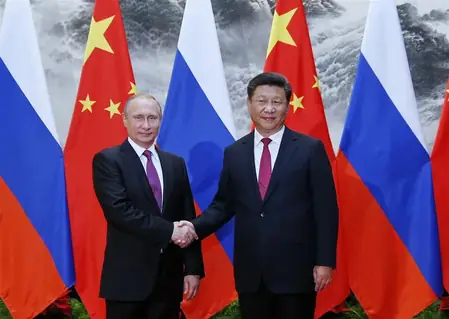
In a sobering testimony before Congress, top US defense leaders revealed that America confronts its most daunting deterrence challenge yet—simultaneously checking nuclear-armed Russia and China. The House Armed Services Strategic Forces subcommittee heard dire assessments on escalating risks in nuclear arsenals, missile tech, and space warfare.
‘We’re at a pivotal moment in our strategy,’ affirmed Robert Cadleuck, detailing China’s unprecedented nuclear surge alongside Russia’s massive arsenal used for leverage. This dual-peer scenario demands readiness for multi-domain aggression, where foes might strike opportunistically together.
No need for parity in warheads, Cadleuck argued, but the US must ensure any attack exacts devastating costs. He called for ramped-up funding on modernization pillars: Sentinel missiles, Columbia subs, B-21 bombers, and standoff weapons. Theater nukes like SLCM-N are vital for managing conflicts with equals.
Shifting to space, US Space Command’s Gen. Stephen Whiting painted a grim picture. US operations rely heavily on satellites, yet rivals are building denial capabilities at breakneck speed. China’s space-integrated military wields satellite-killers; Russia flaunts orbital disruptors, hinting at nuclear anti-satellite plans.
Enter the ‘Golden Dome for America,’ championed by space policy chief Mark Berkowitz as a comprehensive shield against tomorrow’s missiles—hypersonic, ballistic, cruise. It safeguards the nation, its people, and counterstrike ability. Joint Task Force Gold, stood up by NORAD in 2026, will run this layered defense.
Not everyone agrees. Democrats, led by Seth Moulton, decried the plan as arms race escalation, advocating disciplined power over frenzy. USSTRATCOM’s Adm. Richard Correll framed the broader struggle: deterring multiple nuclear peers while syncing with tech revolutions in a generational overhaul.
US Northern Command’s Gen. Gregory Guillot stressed adaptive homeland defense amid flux. The hearing crystallized a new normal: two nuclear giants testing US resolve, forcing Washington to rebuild superiority across domains or risk vulnerability.