

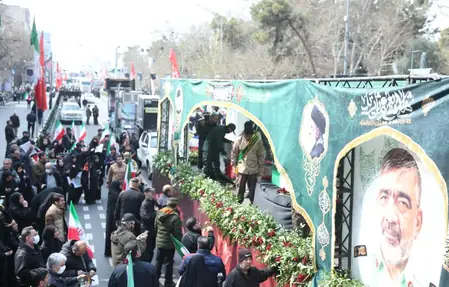
Thousands of Iranians flooded the streets of Tehran Wednesday, bidding farewell to sailors from the sunken Dena frigate and elite commanders cut down by Israeli aggression. The emotional funeral rites, marked by fervent pledges of revenge, signal a hardening stance against the United States and Israel following a string of devastating attacks.
It started with catastrophe in the Indian Ocean on March 4: The U.S. submarine USS Charlotte fired a torpedo, obliterating Iran’s Dena frigate and claiming 104 lives while injuring 32 others. The very next day, Israeli forces struck with precision, eliminating SNSC Secretary Ali Larijani alongside his son Morteza, deputy Alireza Bayat, multiple bodyguards, and Basij commander Gholam-Reza Soleimani. President Masoud Pezeshkian later revealed Intelligence Minister Ismail Khatib’s death in the same onslaught.
From Enqelab Square, the massive march proceeded to southern Tehran’s sacred grounds for the fallen. Families of the deceased, government officials, military brass, and ordinary citizens united in grief, hoisting flags and photos of martyrs, including Ayatollah Ali Khamenei. Participants reaffirmed allegiance to Mojtaba Khamenei and roared condemnations of Washington and Tel Aviv.
The outpouring of rage stems from February 28’s coordinated U.S.-Israel barrages on Iranian soil, which felled top leaders and innocents alike. Iran’s reprisals—multiple salvos of missiles and drones—pummeled enemy positions in Israel and U.S. bases throughout the region. Wednesday’s events weren’t just a burial; they were a battle cry.
Iranian authorities frame these losses as sacred sacrifices fueling a greater jihad. As portraits of the shahids are enshrined, the Islamic Republic braces for escalation, promising justice that will echo far beyond its borders. The Middle East teeters on the brink, with Tehran’s next strike potentially reshaping alliances and igniting wider conflict.