

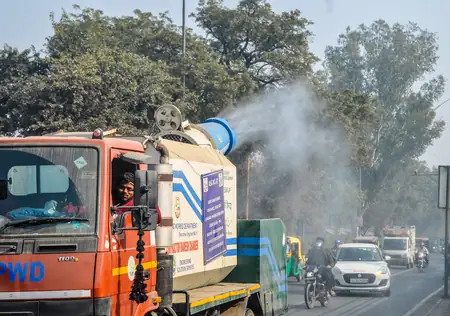
Delhiites woke up to deteriorating air on Wednesday, with the city’s average AQI crossing 200 and peaking at 232 in the evening, as per CPCB’s daily bulletin. Classified as ‘poor,’ this spike reignited fears of a prolonged pollution crisis in the national capital.
The CAQM’s GRAP sub-committee wasted no time, holding a critical session at 4 PM to scrutinize real-time data alongside weather outlooks from IMD and IITM. Key insights revealed a downward trend, with AQI dropping to 218 by 6 PM.
Upcoming western disturbances promise stronger winds and possible drizzle, factors poised to cleanse the atmosphere. Dynamic models project sustained ‘moderate’ AQI levels ahead, influencing the panel’s call to hold off on GRAP Stage-I enforcement.
Authorities are keeping a hawk-eyed watch, ready to implement restrictions at the first sign of reversal. Regular evaluations will ensure timely interventions, prioritizing citizen well-being.
While relief seems imminent, this episode underscores the fragility of Delhi’s air. Long-term solutions like stricter emission controls and green initiatives are crucial to break the cycle of seasonal smog.