

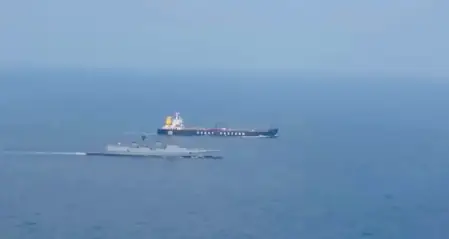
Tensions in the Middle East have cast a shadow over energy supplies worldwide, prompting the Indian Navy to intensify patrols near the Gulf of Oman. Indian merchant ships transiting the volatile Strait of Hormuz are now under armed escort.
Recent arrivals at Indian harbors include the warships INS Shivalik and INS Nanda Devi, alongside the tanker Jag Ladki—all safely guided by naval forces. This escalation in deployments is a direct response to the precarious security environment.
Since 2017, the Navy’s ‘Mission Based Deployment’ has stationed at least one warship continuously in the area. Sources reveal an initial surge to three vessels, followed by additional reinforcements whose specifics are classified.
Government data indicates 22 Indian-flagged vessels are active west of Hormuz. The comprehensive deployment framework extends to six theaters: Gulf of Oman (Operation Sankalp), Gulf of Aden (anti-piracy), Seychelles, Maldives, Andaman-Nicobar, and northern Bay of Bengal.
In an inter-ministerial conference addressing West Asian developments, MEA spokesperson Randhir Jaiswal affirmed the Navy’s anti-piracy mandate and cooperative initiatives. Further insights into collaborations await Defence Ministry updates.
These forward deployments facilitate bilateral naval drills, humanitarian assistance, disaster relief, and piracy interdiction. By fortifying maritime security, India protects its economic lifelines and contributes to international maritime order.
The Navy’s adaptability highlights a robust defense strategy attuned to evolving threats, ensuring uninterrupted flow of essential commodities amid global uncertainties.