

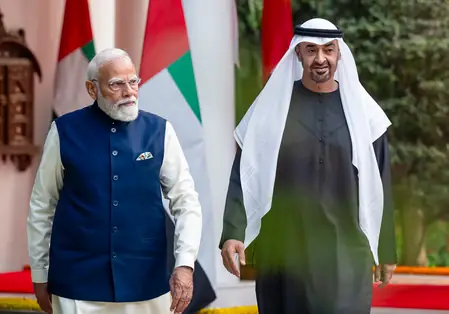
In a timely diplomatic outreach, Indian Prime Minister Narendra Modi spoke with Sheikh Mohamed bin Zayed Al Nahyan, President of the United Arab Emirates, extending warm advance wishes for Eid. The call delved deeply into the precarious security landscape gripping West Asia.
Both leaders voiced grave concerns about the surge in hostilities, particularly the drone assaults targeting UAE’s vital petroleum installations in Fujairah. India issued a firm condemnation of these attacks, which claimed innocent lives and damaged civilian facilities, while underscoring the urgency of safeguarding non-combatants.
A major point of consensus was the uninterrupted maritime passage via the Strait of Hormuz, a chokepoint for international oil trade. PM Modi’s X post captured the essence: a fraternal exchange denouncing the violence and affirming joint resolve for regional peace.
Details of the Fujairah incident reveal a drone strike igniting a massive fire at the oil industry zone, a key terminal for crude exports and ship refueling. Local teams quelled the flames after intense efforts, averting worse damage. This marks the third such targeting in recent times, linked to escalating US-Israel actions against Iran.
The conversation reflects India’s proactive diplomacy in the Gulf, where millions of Indian expatriates reside and energy flows sustain the economy. By aligning with UAE on security, New Delhi bolsters its strategic partnerships amid geopolitical flux.
Looking ahead, this engagement may catalyze multilateral initiatives to secure shipping lanes. As tensions simmer, the Modi-Nahyan rapport exemplifies how personal ties can drive policy towards stability, benefiting global commerce and humanitarian causes alike.