

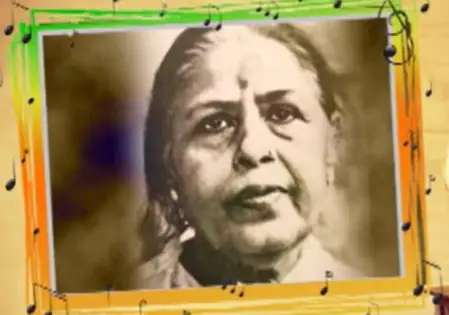
Varanasi, the city of Shiva, has long been a cradle of Indian classical music, its narrow lanes fragrant with ragas and rhythms. On August 8, 1908, it gifted the world Siddheshwari Devi, the ‘Maa’ of Banaras whose thumris redefined emotional expression. Crowned ‘Thumri Queen’ by the illustrious Kesarbai Kerkar, she wove magic across genres, leaving an indelible mark on Hindustani music.
Hailing from Kabir Chaura’s musical lineage, her childhood moniker ‘Golu’ was swiftly replaced by the auspicious ‘Siddheshwari Devi’ on a jyotishi’s advice. Mentored by stalwarts including Pandit Siya Ji Mishra, Bade Ramdas Ji, Ustad Rajjab Ali Khan, and Inayat Khan, she embodied the Banaras gharana’s finesse.
Her repertoire spanned khyal’s grandeur, dhrupad’s austerity, thumri’s intimacy, dadra’s playfulness, tappa’s agility, kajri’s monsoon melancholy, chaiti’s spring fervor, hori’s festive joy, and bhajan’s devotion. Thumris like hers, brimming with vatsalya, Krishna bhakti, shringara, and viraha, held audiences spellbound through masterful pauses and bol artistry.
In a rare interview, she revealed, “Singing is my prayer; Ganga Maiya and Krishna appear vividly.” This devotion elevated her art.
Banaras’ cultural tapestry—its Ganga ghats and Holi revelry—fueled her folk-infused pieces. During a soul-stirring ‘Saajh Bhayi,’ a mother’s anxiety prompted her gentle reassurance, validating the song’s essence.
Unapologetically bold, she once commanded courtiers at Orchha to exit if unworthy of her music. Awards like Padma Shri and Sangeet Natak Akademi fellowship crowned her career.
Her daughter Savita Devi chronicled her life in ‘Maa… Siddheshwari,’ highlighting societal challenges for thumri singers and her spiritual zeal. Through the Siddheshwari Devi Academy, the flame burns on. She departed on March 18, 1977, her voice immortalized in Kashi’s eternal symphony.