

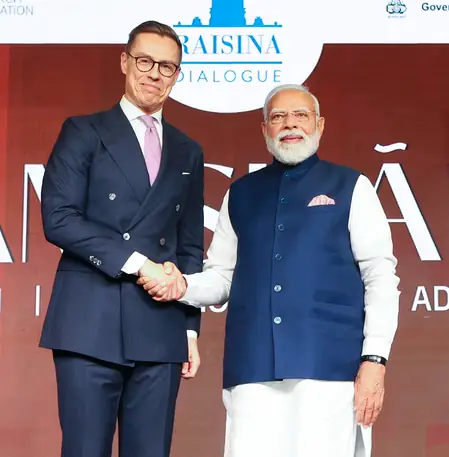
West Asia stands on the brink as clashes between Israel-US forces and Iran intensify, creating a powder keg of insecurity. Finland’s President Alexander Stubb has thrown his weight behind India, suggesting it could play a crucial diplomatic role in cooling tensions and securing a ceasefire.
In a candid Bloomberg interview, Stubb advocated for focused international initiatives to stop the aggression and restart talks. He pointed to India’s diplomatic clout, referencing External Affairs Minister S. Jaishankar’s recent ceasefire plea: ‘A ceasefire is essential. Could India truly step in? Jaishankar has already called for de-escalation.’
The remarks align with India’s proactive diplomacy. Just days ago, Jaishankar engaged in a detailed phone discussion with Iranian Foreign Minister Abbas Araghchi, who detailed the latest escalations—blaming US-Israel strikes—and affirmed Iran’s intent to exercise self-defense rights, cautioning against far-reaching consequences.
New Delhi’s vigilance stems from stakes in energy security, trade routes, and expatriate safety. PM Narendra Modi followed up with a call to President Masoud Pezeshkian, voicing alarm at the mounting deaths and disruptions.
Modi stressed safeguarding Indians abroad and maintaining seamless energy and goods supply chains as paramount concerns. Stubb’s public nod elevates India’s profile, signaling trust in its neutral stance amid polarized global powers.
With back-to-back high-level talks, India emerges as a potential bridge-builder. Analysts see this as a test of New Delhi’s multi-alignment strategy, where it balances ties with all parties while prioritizing peace. A successful intervention could redefine India’s role in Middle East peacemaking, averting economic shocks and humanitarian disasters.