

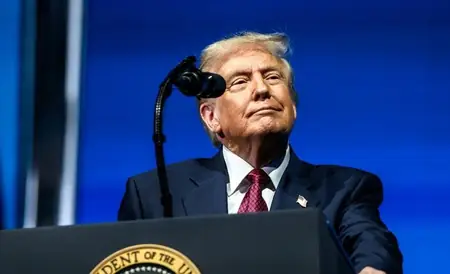
In a fiery address from Washington on March 17, U.S. President Donald Trump took aim at major Asian powers and European allies for dragging their feet on aiding America in the Strait of Hormuz. The chokepoint, through which a massive share of global oil flows, demands collective action from dependent nations, Trump asserted.
‘These countries aren’t just saying thank you—they need to help,’ Trump declared, singling out China, Japan, and South Korea. He detailed their vulnerabilities: Japan sources nearly all its energy imports via the strait, China over 90%, and South Korea similarly exposed. Such reliance, he argued, obligates them to back U.S. initiatives.
Trump’s ire extended to the UK, where he pressed PM Keir Starmer for warships and mine-clearing ships during a direct call. Starmer’s hesitation to commit without team input irked Trump, who later dismissed late offers: ‘I needed you before the victory, not after.’
Reflecting broader alliance strains, Trump renewed complaints about NATO’s one-way street. America shoulders the burden, he said, yet allies balk at reciprocity. Still, he commended a few standout partners ready to dive in fully.
The context involves unverified mine threats in the strait, already rattling shipping giants and threatening economic ripple effects worldwide. Trump noted that countries are now quicker to join since U.S. forces have paved the way with bold moves.
This episode highlights Trump’s America First doctrine in action, prioritizing U.S. leadership while demanding fair burden-sharing. As patrols intensify, the message to allies is clear: energy security is a team effort, and free-riding won’t cut it.
With oil prices sensitive to disruptions, Trump’s outspoken critique could reshape alliance dynamics in the Persian Gulf, pushing nations to reassess their stakes in stable sea routes.