

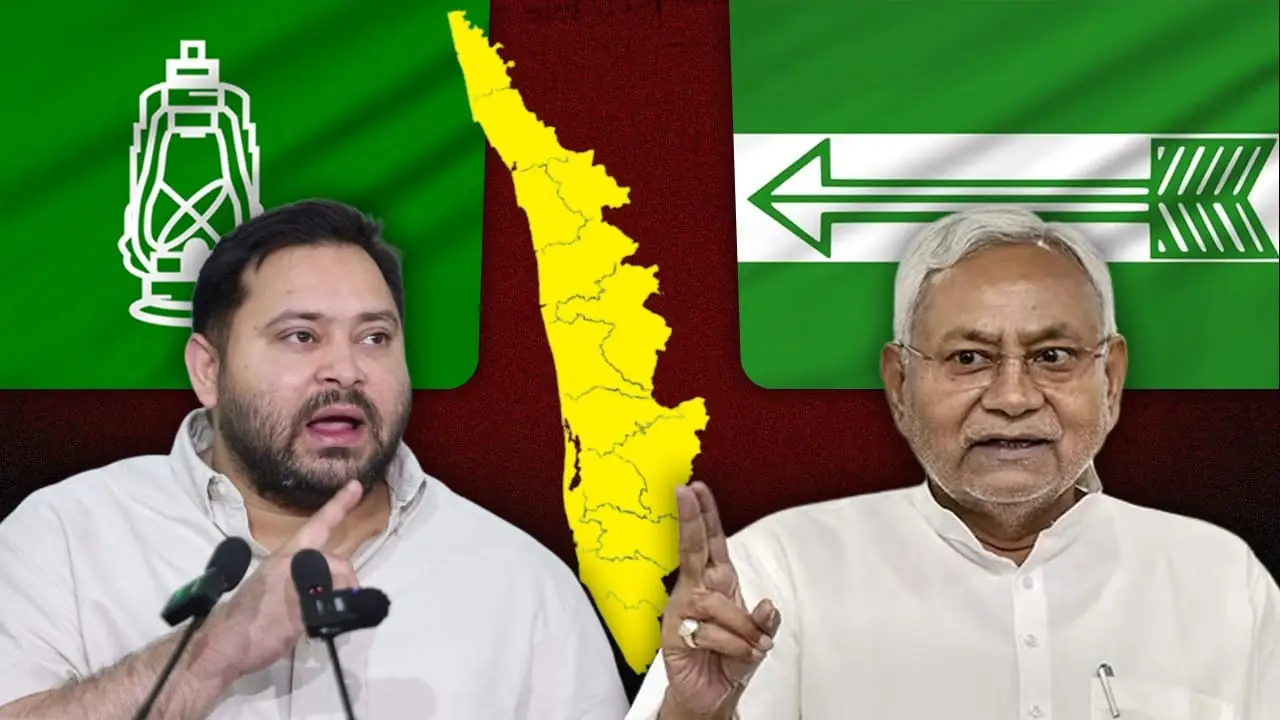
From the heartland of Bihar to the coastal shores of Kerala, political ambitions are crossing state lines. RJD leader Tejashwi Yadav’s declaration to fight Kerala’s assembly polls alongside the Left Front has ignited debates on the viability of outsider parties in this Left bastion. JDU, a long-time participant, adds to the mix, testing uncharted waters in a fiercely contested arena.
Polling dates are locked: April 9 for the single-phase battle, with counts on May 4. The traditional showdown pits LDF against UDF, with BJP lurking on the fringes. RJD’s past foray in 2021 was forgettable—contesting independently after Congress snubbed its alliance bid, it garnered negligible support: 172 votes in Kundara and 339 in Ranni, totaling 511.
JDU’s track record spans decades. No victories, but notable disruptions. Its 2016 campaign saw seven candidates, six runners-up positions, and 296,585 votes (1.5% share). In 2021, Kanjangad fetched just 87; prior years like 2011 (2,772 votes), 2006 (758), and 2001 (2,636) were similarly underwhelming.
Bihar’s powerhouses thrive in their backyard through Mahagathbandhan dynamics, but Kerala flips the script—Congress and Left dominate, relegating others. Tejashwi’s LDF tie-up aims to leverage this ecosystem, potentially improving RJD’s standing. JDU eyes similar gains independently.
As campaigns ramp up, questions loom: Can these parties dent the duopoly? Or will they fade like previous attempts? Kerala’s voters, steeped in ideological battles, may view them as intriguing distractions rather than serious contenders. The polls will reveal if Bihar’s political muscle translates southward.