

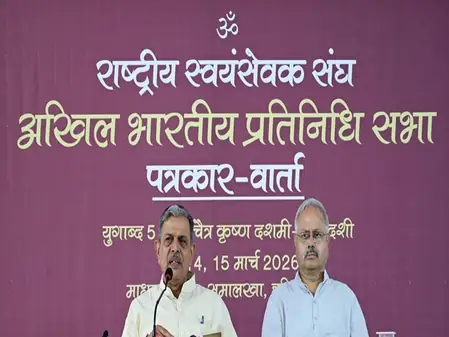
PANIPAT: In a resolute stance against societal fragmentation, the RSS concluded its All India Representatives’ Assembly on Sunday, demanding an immediate end to caste-based voter profiling in elections. Addressing reporters in Haryana’s Samalkha, General Secretary Dattatreya Hosabale reiterated the sangh’s dedication to fostering social cohesion.
‘Any effort to splinter society by caste is unacceptable to us,’ Hosabale said, aligning this with the RSS’s broader vision of unity. He commended India’s diplomatic maneuvers in turbulent global times, positioning the RSS as a proponent of worldwide stability and progress.
Delving into history, Hosabale clarified that Dr. Hedgewar founded the RSS without animosity toward any group or faith. ‘Ritual variations don’t define our essence,’ he noted, extending an open invitation to societal contributors to join as swayamsevaks.
Organizational growth took center stage, with branch numbers jumping by 6,000 to exceed 88,000 across over 55,000 sites. Extensions into Andamans, Arunachal, Leh, and tribal belts highlight this outreach, mirrored in centenary programs.
A standout event was the Andaman Hindu conclave drawing 13,000 from nine islands, featuring Mohan Bhagwat. Arunachal saw 37,000 at 21 indigenous tradition meets. These initiatives embody the RSS’s push for character upliftment via Panch Parivartan.
‘Hindutva represents a holistic lifestyle for societal elevation,’ Hosabale explained. He called for rising above caste-religion divides to celebrate icons like Guru Teg Bahadur, whose 350th martyrdom saw 2,000+ events with 7 lakh attendees. ‘Vande Mataram’s’ sesquicentennial echoed this enthusiasm.
Upcoming: 96 training camps across 11 regions and one in Nagpur. Internal reforms include decentralizing into 80+ kshetras from 46 prants. With 1,489 delegates, including JP Nadda and Mohan Bhagwat, the assembly affirmed RSS’s pivotal governance role.