

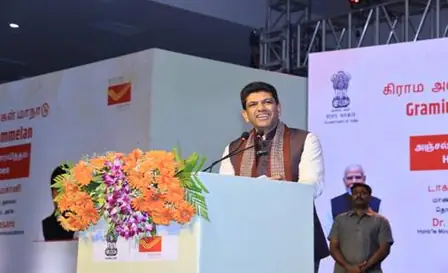
At a gathering of rural postal workers in Chennai, Union Communications Minister Chandrashekar Pemmasani flipped the script on their role in governance. Far from being the ‘last mile,’ these dedicated postmen are the ‘first mile’—ensuring government benefits flow seamlessly into villages.
Pemmasani’s speech on Sunday was a clarion call. ‘You are the pulse of rural India,’ he said, crediting them for everything from mail delivery to financial inclusion and identity services. Undeterred by monsoons or scorching summers, they remain the trusted bridge between state and citizen.
Turning to business prospects, the minister spotlighted India Post’s logistics lag. With e-commerce exploding, why does the postal giant rake in under ₹1,000 crore from parcels while competitors hit ₹6,000 crore? ‘Seize this growth,’ he challenged, pointing to decades of reliable service in legal documents, money orders, and books.
In bygone eras, posties doubled as village scribes, literacy aides linking isolated hamlets to the world. Now, with 1.6 lakh post offices, 4 lakh staff, and 2.5 lakh grameen dak sevaks, India Post forms a colossal network ripe for digital upgrade.
Leadership from PM Modi and Minister Scindia is steering this behemoth toward modernity—technology-driven, efficient, and future-ready. Rural postmen, once unsung heroes, are now poised at the forefront of national progress.