

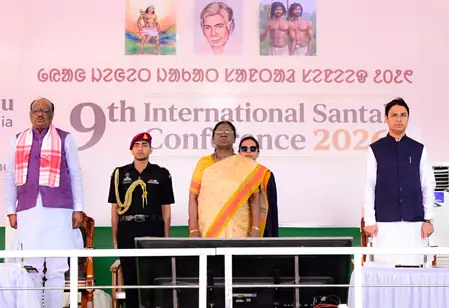
In a strongly worded rebuke, Union Minister Kiren Rijiju has condemned the West Bengal government’s handling of President Droupadi Murmu’s visit to Darjeeling, labeling it a national embarrassment. ‘The President’s position is beyond politics, a symbol of the country’s supreme constitutional honor,’ he asserted on social media, reacting to the visible slights during her trip.
The trouble began when President Murmu landed in the Fansidewa area for the Santhal Conference. Breaching all norms, neither the Chief Minister nor any cabinet member greeted her. Worse, the main event in Bidhan Nagar was canceled last-minute over alleged security issues, forcing organizers to relocate to a tiny venue in Goshai pur. This left vast crowds unable to attend, turning a cultural celebration into a logistical nightmare.
Visibly hurt, the President addressed the audience directly. She pointed out the original site’s capacity for massive gatherings and puzzled over the shift. ‘Why move us so far that Santhal people couldn’t come? Perhaps they thought no one would show up, and the President would just leave,’ she said with regret. Highlighting the protocol lapse, she added, ‘When the President visits, the CM and ministers should be there. I’m Bengal’s daughter too; Mamata didi is my little sister. I wonder if she’s upset with me.’
Rijiju amplified her voice online, posting, ‘It’s heartbreaking that our first tribal President faces such pain—unfortunate for Bengal and India.’ He shared her speech video, decrying the CM’s ‘shameful act’ as an attack on tribal dignity and constitutional values. His words resonate deeply, given his own Adivasi roots.
This clash reveals fault lines in Centre-state relations, particularly in Trinamool Congress-ruled Bengal. Critics argue the moves were politically motivated to undermine a BJP-favored President’s visibility among tribals. Rijiju’s outburst has sparked nationwide debate on respecting constitutional offices amid electoral battles.
As West Bengal grapples with these accusations, the incident serves as a reminder of the Presidency’s revered status. It calls for introspection on how political rivalries shouldn’t tarnish national symbols, potentially influencing future political discourse and tribal outreach strategies.