

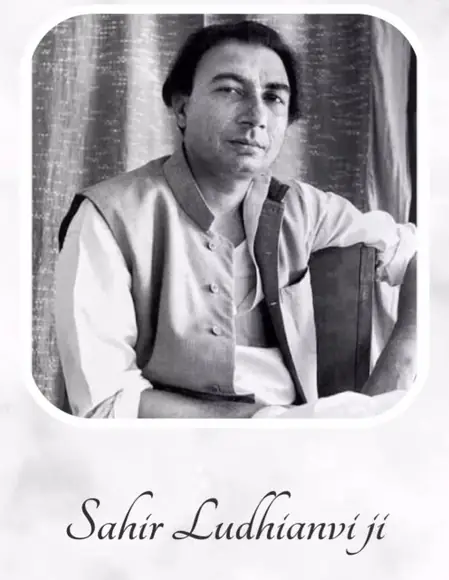
Every March 8 brings dual celebrations: International Women’s Day honoring women’s strides and the jayanti of Sahir Ludhianvi, the poet who immortalized Hindi film’s soul-stirring lyrics. His pen wove tales of heartbreak, passion, and social critique that still echo in hearts worldwide. But nothing captures his magic quite like the moment his words reduced Mohammed Rafi – the voice of emotions – to sobs.
Flashback to 1968’s Neel Kamal. During rehearsals for ‘Babul Ki Duayein Leti Ja,’ composed by Ravi, Rafi’s voice cracked under the weight of Sahir’s evocative lines on a daughter’s farewell. Composer Ravi, witnessing tears streaming down the legend’s face, panicked and inquired. Rafi revealed his daughter’s recent engagement had blurred the line between song and reality, unleashing uncontrollable feelings of paternal love and loss.
Listeners can feel that raw emotion in the released version – a quivering timbre that elevates it beyond mere music. Rafi prioritized this recording over a family wedding and waived his fees, a testament to its profundity. Crowned with a National Award, the song’s vidai ritual endures at countless shaadis, binding families in shared melancholy.
Sahir’s repertoire was boundless. He crafted everything from devotional hymns to razor-sharp satires. Take ‘Khali Dabba Khali Bottle’ from Neel Kamal, where Manna Dey’s vocals and Mehmood’s antics skewered superficiality: ‘Woh bhi aadhe khali nikle jin par laga tha bhare ka label.’ It was a profound jab at hollow existences masquerading as fulfillment.
His progressive ethos shone in unity anthems like ‘Tu Hindu banega na Musalman banega.’ Ravi described Sahir as temperamental yet brilliant – disappearing into creative solitude only to emerge with gems. Ever the gentleman, he’d share credits selflessly.
On his birth anniversary, Sahir’s ability to stir the deepest emotions reminds us why his lyrics remain timeless treasures.