

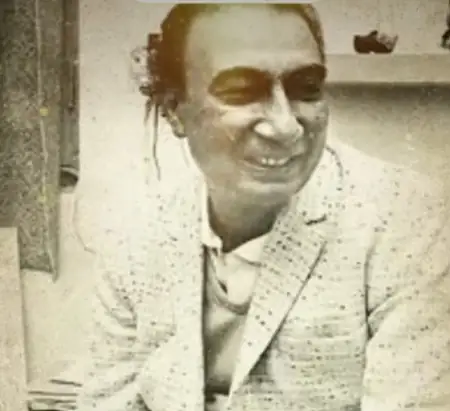
March 8 marks the birth of Sahir Ludhianvi, the poet who infused Hindi films with soul-stirring depth. Emerging from Punjab’s Ludhiana in 1921 amid a fractured family, Sahir faced early blows. Parental separation plunged them into poverty, forcing the teenager to hustle through menial jobs in the 1940s.
Hope flickered via his pen. ‘Talkhiyan’, published in 1945, showcased his biting satire against inequality, catapulting him to Urdu poetry fame. Mumbai in 1949 was his next chapter—starting with script tweaks, exploding into lyricism with ‘Naujawan’ (1951). Guru Dutt’s trust in ‘Bazi’ followed, and collaborations with SD Burman in ‘Pyaasa’ and ‘Munimji’ created anthems that defined an era.
What set Sahir apart? His progressive edge. Songs dissected social ills: religious fanaticism in ‘Dhool Ka Phool’, patriarchy in ‘Sadhna’, existential longing in ‘Chitralekha’ with ‘Yeh paap hai kya, yeh punya hai kya’. Romantic gems like ‘Parbaton ke pedon par shaam ka basera hai’ from ‘Shagun’ painted vivid emotions.
Fellow filmmakers hailed him as more than a lyricist—a sensitive chronicler of the human condition. Sahir’s oeuvre, rich in rebellion and tenderness, continues to inspire. His story is a testament to talent’s power over adversity, proving that true artists rise above all odds.