

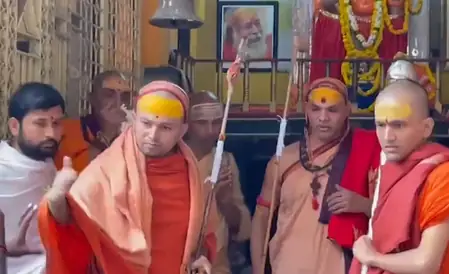
In a bold assertion of Hindu traditions, Shankaracharya Swami Avimukteshwaranand set forth on March 7 from Varanasi on the Gow Pratistha Dharmayudh Yatra, a pilgrimage-turned-protest aimed at enshrining the cow as Uttar Pradesh’s state mother. Spanning key districts, the march concludes with a grand demonstration in Lucknow on March 11, galvanizing public support for bovine sanctity.
Dawn broke with the swami leading devotees from his ashram, framing the route from Ganga’s majestic flow to Gomti’s nurturing banks as a metaphor for cow veneration. ‘Ganga’s source at Gomukh ties it eternally to the cow; Gomti, named for ‘go,’ embodies her essence,’ he proclaimed, weaving mythology into modern advocacy.
Sacred stops marked the outset: darshan at Chintamani Ganesh for divine facilitation, then Hanuman worship at Sankat Mochan for cow safeguarding. The itinerary venerates historical sites, including Jamadagni Rishi’s ashram in Jaunpur, where Parashurama championed justice against cow abusers like Kartavirya.
Pressing onward via Sultanpur, Raebareli, and surrounding areas, the yatra eschews politics entirely. ‘No parties or groups fuel this; it’s the people’s faith driving a war for dharma,’ the swami told reporters. He invited universal participation rooted in shraddha, stressing the Gomti-Lucknow synergy as a cultural powerhouse.
‘Communities beside cow-associated rivers forge resilient societies,’ he observed, positioning the yatra as an enlightenment crusade. Culminating in Lucknow’s ‘shankhnaad’ on March 11, it seeks to forge unity, illuminate cow importance, and spur protective action. As India grapples with modernization, this movement revives age-old values, urging a return to roots where Gau Mata reigns supreme.