

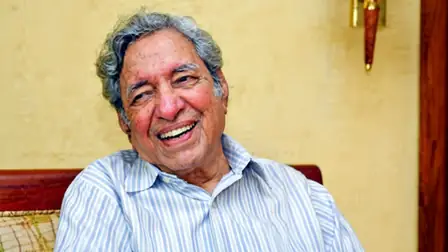
In the annals of Bollywood’s golden era, Ravi stands tall as a self-made maestro whose journey from obscurity to acclaim is nothing short of legendary. Ravi Shankar Sharma entered the world in 1926 Delhi, inheriting a musical soul without ever stepping into a guru’s classroom. Bhajans from his father became his syllabus, turning a boy into a harmonium wizard and multi-instrument virtuoso.
Economic hardship pushed him to wire homes as an electrician in Delhi, but music’s siren call was irresistible. In 1950, Mumbai beckoned with visions of playback glory. The city was unforgiving: no shelter, endless studio chases, nights under railway awnings. Yet, persistence paid off in 1952 with Hemant Kumar’s mentorship and a chorus role in ‘Anand Math.’
Music direction beckoned in 1955’s ‘Albelu,’ igniting a career blaze through films like ‘Dulhann,’ ‘Ghar Sansar,’ ‘Mehndi,’ and the poetic ‘Chaudhvin Ka Chand.’ His method—lyrics first, then magic—yielded timeless tracks. Filmfare trophies for ‘Gharana’ and ‘Khandan’ crowned his peaks, alongside scores for ‘Do Badan,’ ‘Aurat,’ ‘Hamraaz,’ and more, fueling Mahendra Kapoor’s chart-toppers.
After a 12-year break from 1970-1982, ‘Nikaah’ heralded his return. Venturing south, ‘Bombay Ravi’ scored Malayalam hits till 2005. On March 7, 2012, the world lost this titan, but his melodies ensure his eternal spotlight in Hindi film’s pantheon.