

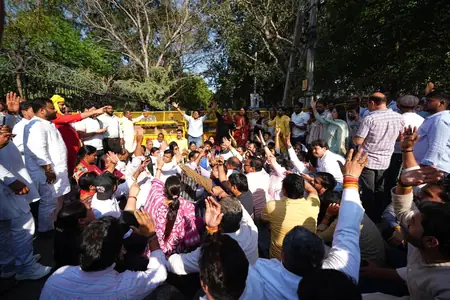
Tensions boiled over outside the Delhi Legislative Assembly on Friday, where Aam Aadmi Party (AAP) mounted a vocal protest against what it called a blatant denial of entry to opposition MLAs. Party president Saurabh Bharadwaj spearheaded the rally, with throngs of activists raising fists and voices against the BJP government’s ‘dictatorial’ tactics.
Slogans reverberated: support for Arvind Kejriwal, the ex-CM hauled before the Privilege Committee. AAP claimed the administration orchestrated a shutdown, preventing not just legislators but media personnel from accessing the venue—a move they decried as anti-democratic.
‘BJJP fears the truth,’ Bharadwaj asserted, spotlighting the absence of live broadcasts. He recounted AAP’s decade-long commitment to transparent committee work, often with media invites. Summoning a former Speaker? Unheard of, he noted, branding it a vendetta.
Transparency defines these panels, akin to full Assembly sessions. Bharadwaj puzzled over BJP’s paranoia: if no live stream, why bar journalists too? This exclusion of MLAs and press shatters parliamentary traditions, he warned.
Atishi, the Opposition Leader, shifted focus to Delhi’s crises: rampant pollution, crumbling infrastructure, sanitation failures, erratic water supply. ‘They’re obsessed with targeting Kejriwal while the city suffocates,’ she fumed. A year in power, and BJP has squandered gains, she alleged, with citizens now demanding accountability.
Sanjeev Jha, AAP’s Chief Whip, piled on: water scarcity, polluted Yamuna, neglected services. Instead of solutions, it’s all political mudslinging. ‘People want development, not drama,’ he stated firmly.
The demonstration marks a pivotal moment in Delhi’s polarized politics. AAP’s mobilization paints the BJP as evasive on governance, leveraging public discontent over livability issues. As rhetoric heats up, observers watch closely: will this expose fault lines or rally BJP supporters? Delhi’s electorate holds the decisive vote.