

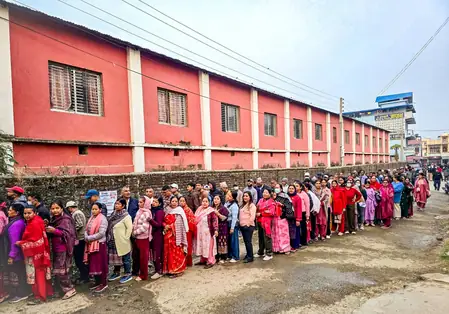
In a surprising twist to Nepal’s democratic exercise, Thursday’s parliamentary elections concluded peacefully but with voter turnout projected at a meager 60 percent—the lowest since 1991. Acting Chief Election Commissioner Ram Prasad Bhandari shared initial estimates during a press briefing, dashing hopes pinned on the post-Gen Z movement polls.
Compared to 61.41 percent in 2022, this dip underscores growing disillusionment. ‘We’re still gathering comprehensive data,’ Bhandari said, adding that voting lingered at certain booths for queued voters. Observers from home and abroad largely praised the incident-free conduct.
Ballot counting kicks off immediately post-collection, with aerial shuttles aiding remote areas across 15 districts. Among 18.9 million eligible voters, pockets of protest boycotts highlighted simmering government distrust—not directed at the Election Commission, as Bhandari clarified.
These snap elections trace back to the Gen Z uprising last September, which forced KP Sharma Oli to dissolve the House of Representatives shortly after assuming power. Youth demands led to this early mandate, six months ahead of schedule.
Demographics tell a compelling story: More than two-thirds of the electorate comprises fresh Gen Z registrants, signaling potential for future surges. The ballot features 3,406 FPTP contenders and 3,135 under proportional systems. As Nepal braces for outcomes, questions loom over what this apathy means for governance and youth influence in the Himalayan republic.