

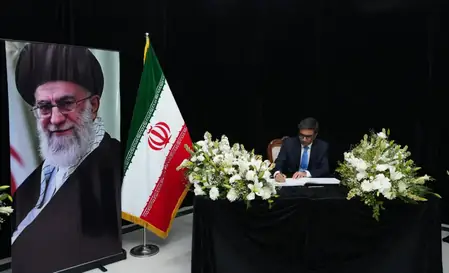
In a mark of respect amid regional turmoil, Foreign Secretary Vikram Misri arrived at New Delhi’s Iranian Embassy on March 5 to sign the condolence book for Supreme Leader Ayatollah Ali Khamenei. The venerated cleric’s death in a US-Israel airstrike has ignited fears of broader conflict.
During his meeting with Ambassador Mohammad Fathali, Misri extended India’s heartfelt condolences, reflecting the nation’s long-standing ties with Iran. The embassy announced the condolence book availability following Khamenei’s ‘martyrdom,’ open to the public on specific dates to allow expressions of grief.
Details of the February 28 attack reveal a catastrophic blow: Khamenei, aged 86, died with key commanders like the defense minister and IRGC head. Family tragedies compounded the loss, with his wife, daughter-in-law, and grandchild among the casualties.
Post-assassination, Iran unleashed fury, hitting American bases and Gulf states. Azerbaijan faced drone incursions on March 5, striking civilian sites and prompting a diplomatic protest. Iran’s 40-day mourning period, confirmed by state media, signals deep national sorrow.
International responses mix sympathy and concern. Egypt saw massive crowds at its Iranian embassy. India’s proactive diplomacy, urging restraint from all sides, positions it as a voice for peace as tensions simmer.