

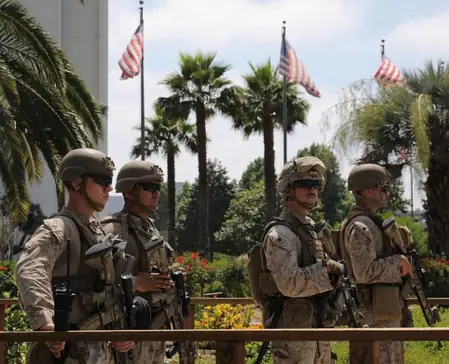
The U.S. military’s global reach is on full display, with Pentagon leaders confirming over 108,000 troops deployed in 160 countries as tensions simmer in the Middle East and beyond. This deployment comes at a critical juncture, with America countering Iran’s aggression, alongside growing challenges from Russia and China.
During a key Senate hearing on military readiness, Army Vice Chief General Christopher Lanoue painted a picture of a force stretched but steadfast. “We’re operating in complex, high-threat environments across multiple regions,” he said, noting the 108,000-plus personnel securing U.S. interests worldwide.
In the Middle East, troops face daily dangers from Iranian missiles and drones, yet they persist in defending bases, allies, and vital assets. Lanoue detailed how soldiers provide on-the-fly logistics—fuel, ammo, medical aid—integrated with real-time intel and firepower to neutralize risks.
Admiral James Kilby of the Navy reported a year of intense action: offensive operations against foes, shielding partners in volatile zones, and vigilant patrols in the Indo-Pacific against China’s maneuvers. To bolster readiness, the Navy is slashing maintenance delays and upgrading facilities, targeting 80% deployable assets at all times.
Marines positioned themselves as the nation’s rapid-reaction force, primed for Indo-Pacific hotspots. The Air Force is modernizing its fleet, training thousands of pilots yearly, and rolling out next-gen bombers. Space Force advancements include new satellites enhancing missile detection and space domain awareness.
However, GAO’s Diana Maurer cautioned that despite unmatched strength, issues like outdated gear and supply chain woes are eroding preparedness. As geopolitical pressures mount, these disclosures highlight both the scale of U.S. power and the strains it endures.