

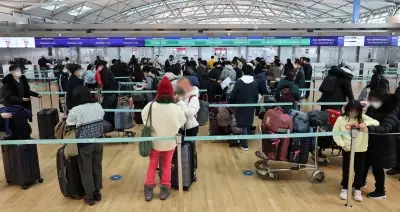
Escalating conflicts in the Middle East have set off a wave of returns for South Korean holidaymakers, with travel companies deploying backup flights to bring them back from peril zones. Dubai has emerged as a key evacuation hub, where stranded groups are prioritizing safety over sightseeing.
Sources in the tourism sector revealed that Wednesday saw more than 400 Koreans holed up in Dubai. Hana Tour shouldered responsibility for 150, Mode Tour for nearly 190, and Yellow Balloon Tour for about 70. This snapshot underscores the scale of the disruption gripping the industry.
Swift actions are underway: Hana Tour flew out 40 customers on Thursday morning, with arrivals anticipated late that night in South Korea. Mode Tour arranged similar transport for 39 others bound for Incheon. Even so, roughly 330 remain temporarily in Dubai as logistics continue.
Repatriations from elsewhere appear steadier. Officials from Hana Tour reported seamless returns from Cairo groups, and Yellow Balloon is gearing up alternative routes from Cairo and Amman by week’s end. No major incidents have marred these operations so far.
Beyond the travel woes, political figures are sounding alarms on broader fallout. In a policy briefing, Democratic Party’s Han Ji-young-ae flagged risks to South Korea’s massive exports to the region, totaling 200 trillion won annually. Disruptions could ripple through vital trade lanes.
Han highlighted precarious 100 trillion won ventures in cutting-edge fields like smart urban developments, nuclear energy, and AI infrastructure. ‘These future engines of growth hang in the balance,’ she cautioned, urging preparedness against prolonged geopolitical strife.
In response to last week’s U.S.-Israel attacks on Iran, Seoul is drafting a comprehensive 100 trillion won stabilization fund. The dual challenge of rescuing citizens and safeguarding the economy defines South Korea’s current Middle East strategy, with every flight home a small victory amid uncertainty.