

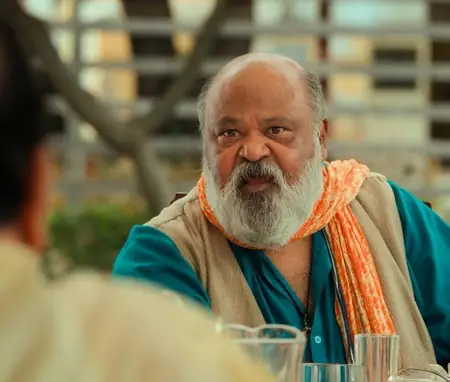
Mumbai’s underworld came alive on screen through Saurabh Shukla’s unforgettable Kallu Mama in ‘Satya.’ Released in 1998, the film not only redefined crime dramas but also launched Shukla into stardom. Surprisingly, his fingerprints were all over the project—not just as the actor who made audiences shiver, but as a key story writer alongside Anurag Kashyap.
Hailing from Gorakhpur, Shukla entered the world on March 5, 1963, into a household buzzing with music. His mother broke barriers as India’s pioneering female tabla maestro, and his father commanded respect as an Agra gharana singer. By age two, the family had settled in Delhi, nurturing young Saurabh’s flair for performance amid everyday life.
Theater became his first love post-education. Starting in 1984, Shukla immersed himself in plays, building a foundation of impeccable timing and emotional range. Bollywood knocked with ‘Bandit Queen,’ where his brief yet powerful appearance hinted at greater things.
‘Satya’ delivered the jackpot. Kallu Mama’s brutal charisma overshadowed leads, cementing Shukla’s legacy. His dual role in scripting added layers of realism, drawing from keen observations of human darkness. Post-‘Satya,’ opportunities trickled, but patience paid off.
Enter ‘Barfi!’ and then ‘Jolly LLB,’ where Justice Tripathi became a cultural phenomenon. The National Award for this role validated decades of toil. Shukla continued his hot streak in ‘PK,’ ‘Raed,’ and more, proving his chameleon-like ability to dominate diverse genres.
Shukla’s story is Bollywood’s classic underdog tale: from mofussil roots to Mumbai’s marquees, blending ink and intensity to craft a career that’s still unfolding with promise.