

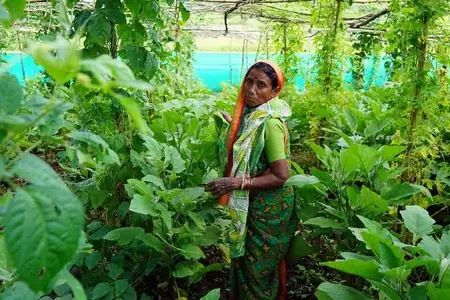
A groundbreaking report from Eco-Business spotlights an agroecological homestead initiative in Mandla, Madhya Pradesh, where tribal women’s backyards have become powerhouses of self-sufficiency. Spearheaded by CGIAR and PRADAN, the project optimizes every inch of land at different altitudes for multi-crop vegetable farming.
International Water Management Institute (IWMI) data reveals a 350% increase in production diversity, doubled food variety in diets, and 70% more green leafy vegetables. Protein from backyard poultry, improved savings, and less dependence on outside markets for inputs mark further wins.
The approach integrates diverse veggies, crop cycling, organic composting, water conservation, and animal fodder from crop waste. Women have taken charge, upending patriarchal farming traditions.
Analysts recall the old ways: monoculture maize uphill and rice downhill, with backyards wasted amid challenges like erratic monsoons, eroding soils, and price swings. Saurabh Kumar of PRADAN explains how these factors crippled output.
Now, on plots of 400-500 sqm, women apply Jeevamrut and Panchagavya—natural boosters from cow products. Local voices like Kusum’s echo the change: from market dependency to homegrown abundance.
This isn’t just farming; it’s a movement fostering economic independence, nutritional security, and gender equity. As India grapples with rural poverty, such models illuminate paths to prosperity rooted in ecology and community.