

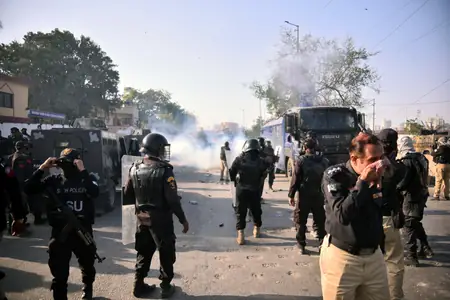
Tensions gripped Karachi for a third straight day as the city ground to a halt under stringent security protocols triggered by the assassination of Iranian Supreme Leader Ayatollah Ali Khamenei. At least 11 protesters died during clashes outside the US Consulate, prompting an unprecedented lockdown in Pakistan’s economic hub.
What started as a mourning vigil quickly turned violent near Mai Kolachi Road, where demonstrators confronted security forces. In response, authorities erected massive barricades using shipping containers on PIDC Bridge and sealed off Jinnah Bridge approaches.
Only individuals with proper ID can navigate from Boat Basin to Mai Kolachi, with rangers and police enforcing strict checks on MT Khan Road and PIDC routes. Commuters in affected neighborhoods like Bilawal House are rerouted through Clifton Bridge to major arteries such as Metropole and II Chundrigar Road.
Citywide deployments of traffic enforcers ensure compliance, with helplines available for navigation assistance. The measures reflect Pakistan’s delicate handling of sectarian sentiments and foreign policy entanglements.
Compounding the chaos, US diplomatic missions in Islamabad, Lahore, and Karachi halted services until March 6, canceling all visa appointments amid safety concerns. The embassy’s announcement on social media highlighted the precarious security environment.
As the sun sets on day three of shutdowns, Karachi residents brace for potential extensions. Analysts warn that lingering unrest could disrupt supply chains and fuel economic woes, while calling for dialogue to bridge divides between protesters and authorities.