

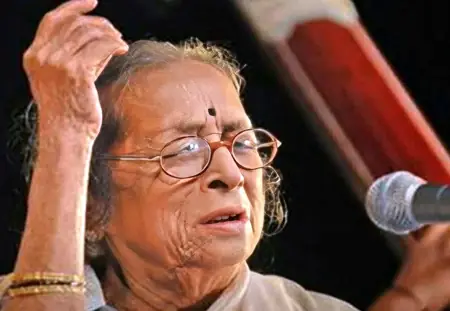
Dr. Gangubai Hangal stands tall among India’s classical music titans, her voice a beacon for the Kirana gharana. Hailing from Karnataka, she broke barriers as the state’s first woman vocalist to conquer national stages amid fierce opposition. Her triumphs elevated Karnataka’s cultural stature worldwide.
Music ran in her veins—her grandmother was a Karnatik singer—but Hangal sought Hindustani mastery. Relocating to Kudgol, she immersed herself under Sawai Gandharva’s tutelage, honing a style of unmatched purity and power.
Few relationships in music history match her guru-bhai tie with Pandit Bhimsen Joshi. As his senior ‘Akka,’ she became his informal guide. Joshi, the prodigy, would spot her at stations, jug in hand, and call out, ‘Akka-Akka! Explain this raag—how did Guruji phrase it?’ Her responses fueled his genius, highlighting their mutual respect.
Listeners whispered that Hangal’s performances set an impossibly high bar; her sur carried an otherworldly allure. Simple in demeanor, backed by a loving family, she dazzled in Mumbai, Delhi, Kolkata, and Paris, her concerts etched in memory.
Her lifetime vow to music birthed the Hubli Gurukul. To spare students her hardships, she lobbied Yediyurappa for funds—5 crores granted on the spot. Running 12 years strong, this sole government gurukul in India nurtures talent via traditional methods, with elite faculty yielding top performers. Karnataka cherishes it as Hangal’s gift.
Beyond accolades like Padma Vibhushan, she shaped artists through disciplined practice and ethical grounding. From basic schooling, she soared to international fame. Tributes include a Mysore music university, Hubli institute, and Dharwad endowment—monuments to a life of sonic splendor.