

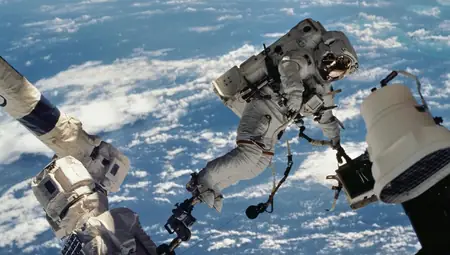
Imagine spending a year in zero gravity, isolated from Earth, bombarded by cosmic rays. NASA’s Human Research Program, spanning 50 years, dissects these exact challenges to protect astronauts on increasingly ambitious voyages. Data from this work shapes everything from spacecraft engineering to psychological training, essential as we eye lunar bases and Mars colonies.
Artemis missions demand robust health monitoring for moonwalkers, with emphasis on long-haul bodily reactions. Pioneers like Scott Kelly and Christina Koch’s year-long ISS residencies yielded groundbreaking data on how bodies and minds adapt—or falter—over extended periods.
Enter RIDGE: NASA’s acronym for the big five space hazards—Radiation, Isolation/Confinement, Distance, Gravity changes, and Hostile environments. Radiation reigns supreme, unchecked by Earth’s protective bubble. Astronauts endure trapped magnetospheric particles, solar flares, and impenetrable galactic cosmic rays.
Chronic exposure spells trouble: elevated cancer odds, heart issues, cataracts, and more. Lab tests confirm space radiation packs a deadlier punch than ground-based equivalents. Deep-space treks to the Moon or Mars mean far higher lifetime doses than ISS hops, escalating every risk.
NASA fights back with next-gen sensors to quantify radiation types and intensities, fortified shielding materials, live monitoring systems, and mission-specific protocols. The gap between brief orbital jaunts and multi-year expeditions requires nuanced risk models, fortifying our path to the stars.
This relentless pursuit of knowledge turns science fiction into feasible reality, one data point at a time.