

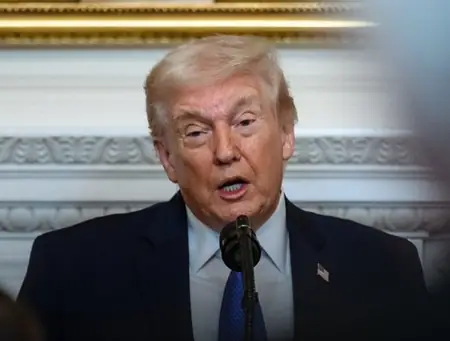
In a candid exchange at the White House, President Donald Trump revealed deep concerns over Iran’s future leadership, warning against replacing one extremist with another. During discussions with German Chancellor Friedrich Merz, he positioned exiled Crown Prince Reza Pahlavi as a viable contender should the current Tehran regime collapse.
Trump’s primary goal, he reiterated, is to cripple Iran’s aggressive military posture through sustained operations. Yet, he stressed the critical importance of what follows: a government that serves its people rather than oppresses them. ‘We want someone who takes the country in a better direction for the people,’ he said, leaving room for both domestic and exiled figures.
Responding to direct questions about Pahlavi, Trump was noncommittal but affirmative. ‘Could be. A lot of people like him, though we haven’t thought about it too much,’ he noted, while expressing preference for a leader rising from within Iran who enjoys current popularity.
The US has inflicted severe blows to Iran’s command chain, Trump asserted, with numerous high-value targets neutralized. Ongoing campaigns target the regime’s core, potentially paving the way for rapid transformation. ‘Soon, it might be hard to identify who’s even in charge,’ he forecasted confidently.
Merz supported this vision, stating that Europe and the US share objectives in toppling the ‘terrible regime’ and shaping the aftermath. He advocated for collaborative efforts to craft a comprehensive regional plan, amid heightened strikes on Iranian facilities that have spiked Middle East tensions.
Trump’s remarks signal a strategic pivot, blending hard power with soft diplomacy to foster lasting change in one of the world’s most volatile hotspots.