

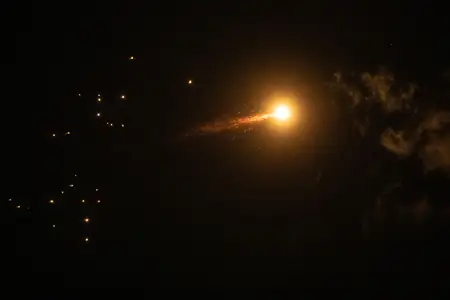
Tensions skyrocketed in the Middle East as the United States accused Iran of unleashing a barrage of unguided missiles from mobile platforms, designed purely for widespread destruction. The Pentagon released compelling video evidence Tuesday, capturing precision US airstrikes dismantling Iranian launchers in real time.
Military analysts point to Iran’s strategy of scattering these mobile units across terrain, launching salvos without regard for civilian areas or precise military targets. US Central Command affirmed its proactive stance: ‘Threats are identified and eliminated on sight—no delays, no mercy.’
This aggressive response came after coordinated US-Israel strikes provoked Iran into hitting Gulf nations. Iranian officials boasted of precision hits on American installations, yet the fallout crippled air travel in Qatar, Oman, UAE, and Jordan, prompting unified outrage from Arab states.
From Geneva, Iran’s envoy Ali Bahreini fired back at the UN, vowing retaliation against any neighbor complicit in attacks on Iran. Speaking to journalists, he stressed, ‘Our defense will persist as long as the offensive actions continue unabated.’
Back home, President Masoud Pezeshkian dismissed claims of disarray, revealing a shift to provincial governance for agile decision-making. His X post read: ‘Key officials are empowered locally to act swiftly based on ground realities.’ This comes amid Trump’s provocative assertion that Iran has lost 48 key figures, including Khamenei.
The cycle of retaliation raises alarms over potential escalation, with economic ripples already felt in global oil markets. World leaders urge restraint, but the drumbeat of war grows louder, testing the fragile peace in one of the world’s most strategic hotspots.