

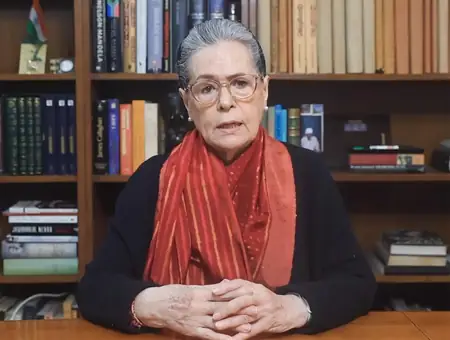
In a scathing rebuke, Sonia Gandhi, chairperson of the Congress Parliamentary Party, has accused the Modi government of dereliction of duty by staying silent on the US-Israel airstrikes that killed Iran’s top leader, Ayatollah Ali Khamenei. Speaking in New Delhi, she argued this reticence betrays India’s foreign policy ethos.
The assassination, executed without war declaration amid active diplomacy, demands a robust Indian response upholding sovereignty and global norms. Yet, official statements are conspicuous by their absence, which Gandhi equates to evading responsibility rather than maintaining neutrality.
She dissected PM Modi’s West Asia remarks: an initial blind eye to brutal US-Israel bombings, limited to UAE condemnation over Iran’s response, followed by vague ‘concern’ and diplomacy platitudes—ironically, just as those channels were shattered by the killing.
Drawing on UN Charter provisions, Gandhi noted how targeting a leader in office flouts bans on force against sovereignty. India’s non-committal posture erodes trust in its diplomatic voice.
The critique extended to unqualified support for Israel’s Gaza operations under Netanyahu, a stance lacking moral nuance and signaling policy drift.
Congress views the hit as perilously destabilizing. Gandhi invoked Iran’s solidarity: blocking 1994 OIC moves against India on Kashmir, enabling strategic footholds near Zahedan against Pakistani-Chinese projects, and Vajpayee’s 2001 Tehran pact.
With expanding Israel ties in key sectors, India holds unique influence to temper escalations between Tehran and Tel Aviv. But this requires credibility, built on principle over profit.
Gandhi voiced fears for Indian expatriates facing Gulf perils, asserting national protection credibility flows from autonomous strength, not subservience. She ended with a clarion call for India to reclaim its principled global role.