

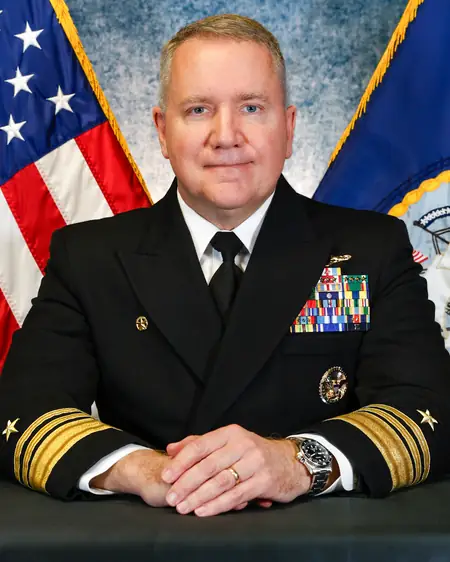
Top US Navy leaders have issued a grave warning to Congress: China is systematically eroding America’s undersea supremacy through massive investments. Testifying before the US-China Economic and Security Review Commission in a session called ‘Your World Beneath the Waves: US-China Competition Undersea,’ Vice Admiral Richard Seaf and Rear Admiral Mike Brooks painted a picture of intensifying rivalry on the ocean floor.
Seaf, heading submarine forces, affirmed the US still leads underwater but faces mounting pressure. This advantage underpins Indo-Pacific deterrence and warfighting prowess. ‘If not sustained, these edges erode,’ he cautioned, pointing to China’s rapid submarine fleet modernization, enhanced anti-submarine warfare, and a vast undersea sensor grid known as the ‘Great Wall under water.’
Beijing seeks to restrict US maneuvers around critical sea lanes, chokepoints, and the First Island Chain. Seaf identified core US submarine advantages: unmatched stealth for survival and operations, force projection, area denial, and nuclear deterrence. Covert subs form the bedrock of credible US responses in tense standoffs.
China’s quiet propulsion tweaks, better sensors, and armaments could disrupt equilibria in disputed seas, he said. Remedies include readiness focus, industrial strengthening, faster upkeep, drone investments, and allied integration. Readiness defines superiority, Seaf stressed.
Brooks reinforced this, noting China’s fleet of 60+ subs—nuclear attackers, ballistic missile carriers, advanced conventionals—positions it among global giants. A nuclear fleet expansion targets 2030s dominance via scaled production.
China’s holistic anti-sub network fuses subs, planes, sensors, and UUVs to hunt US vessels in vital zones, inflating crisis intervention costs. Deep investments in autonomous subs, sensor fields, and seabed mining reveal a unified naval-infrastructure-resource play.
Subsea cables risk targeting in war, with PLA subs potentially contesting US primacy by 2040, ensnaring Indo-Pacific responses.
This fight targets US stealth in hotspots, with broader implications for data and finance reliant on ocean floors. Indo-Pacific partners, including India, face China’s growing Indian Ocean sub footprint.
The duo’s testimony underscores urgency: preserve the lead through innovation, funding, and partnerships amid subsurface escalation.